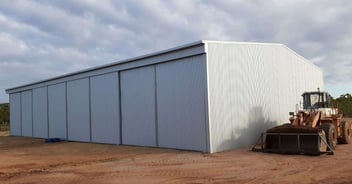
When designing a shed an important consideration that shouldn’t be overlooked is the roof. The type of roof that you use on your shed can not only dramatically change the look of your shed but could influence the practicality, as well as the budget!
Advances in technology and construction have meant that we now have lots of options when it comes to the design of a shed, and the type of roof that we choose. Often we get asked about the differences between a traditional gable roof and something more modern, like a skillion roof. Each roof has its own practical benefits, and design appeal.
In this article we’ll take a closer look at gable versus skillion roofs, outlining the benefits of each. We’ll also let you know what we recommend for a shed. Read on for more information!
Key takeaways: Gable vs skillion roof sheds
- A gable roof has two sloping sides that meet at a central ridge, while a skillion roof has a single sloping surface.
- Gable roofs offer a traditional appearance and can provide useful overhead volume, depending on the building design.
- Skillion roofs have a contemporary look and can suit projects where roof orientation, solar panel placement or rainwater collection are priorities.
- The best roof design depends on the shed’s size, intended use, local climate, structural requirements and budget.
- Compare engineered designs and complete project quotes before choosing a roof style, as the most economical option varies with the project.
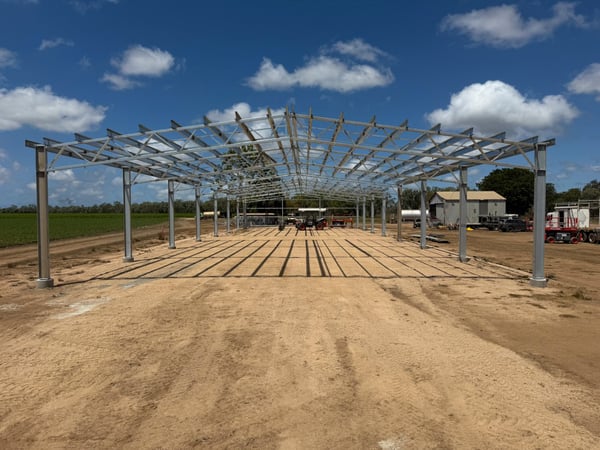
What is a gable roof?
A gable roof is what we would call your traditional style of roof not just for sheds, but for houses too. A gable roof follows a triangular design and is formed when two sloping sides are joined together at an apex ridge. This creates the triangular look of a classic gable roof.
Gable roofs are often considered the easiest to manufacture due to their equal sides; they can also be made out of cost-effective materials like steel. Sheds that feature a gable roof often appear bigger and more grand as the pitched roof adds more height to the shed. With a gable shed roof, the pitch or degree of slope can be adjusted from a relatively low pitch to a higher pitch, depending on environmental factors. Many people avoid a lower-pitched roof as this may not hold up so well in severe weather storms like heavy rain or under snow loading (where relevant). When building a new shed most people will opt for a medium pitch for their gable roof however, steeper pitches can be used when extra airflow through your shed is desired.
A big benefit to choosing a gable roof for a shed, particularly in Australia where we’re prone to droughts and very hot summers, is that a gable roof can help to keep your shed cooler. Hot air will naturally rise to the peak in the middle of the roof meaning the hot air will stay at the top of the shed, leaving you and your stock, nice and cool. This can be further managed with a vented ridge for warm air to escape through.
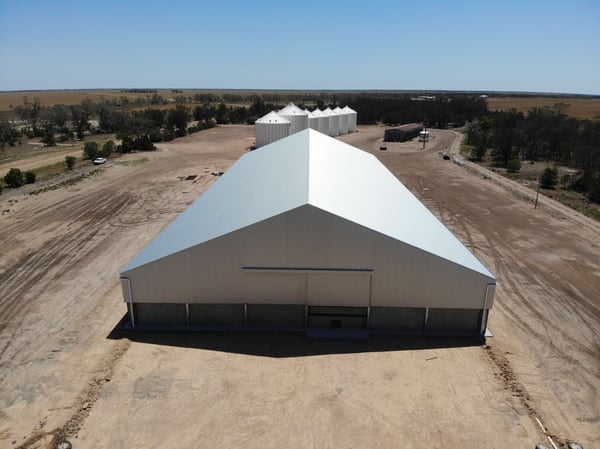
A gable roof follows a triangular design where two sloping sides are joined together.
What is a skillion roof?
In comparison to a traditional gable roof, a skillion roof is a more modern alternative. Skillion roofs, which are often referred to as half-pitched or mono-pitched roofs, are growing in popularity not just for sheds but also for houses. A skillion roof has a very sleek and unique design which can set a shed apart from the rest.
As opposed to having two sloping sides meeting in the centre, like a gable roof does, a skillion roof simply has one single sloping side. This type of roof is often very high-pitched on one side with the highest angle attached to the tallest wall. This makes for quite an eye-catching feature on a shed as this type of roof adds extra volume and a sharp angle that traditionally designed sheds could lack.
An advantage of a skillion roof for a shed is that the harsh slope of the roof will ensure optimum sun exposure. If you’re going to be installing solar panels on your shed this will make collecting solar energy that much easier, as your roof is already at an optimum angle – the pitch doesn’t need to match the other side of the roof allowing for maximum sun capture. Another benefit of a skillion roof is the ability to collect rainwater. The slope of the roof means that water can easily flow from the roof into something like a rainwater catchment tank. It's important to note however that if it does rain or snow heavily, a skillion roof takes the entire weight, whereas a gable roof would split the weight equally between either side of the gable.
One other important consideration to bear in mind is that in order for a skillion to span the same distance as a gable roof, the roof members could be increased. This can lead to a big increase in the cost of building a shed.

A skillion roof has one single, sloping, high-pitched side.
Gable vs skillion roof: What's the difference?
| Feature | Gable roof | Skillion roof |
|---|---|---|
| Roof design | Two sloping sides meet at a central ridge | One continuous sloping roof surface |
| Appearance | Traditional, symmetrical profile | Contemporary, asymmetrical profile |
| Internal space | Creates a central peak that can provide additional overhead volume | Creates different ceiling heights across the shed |
| Solar panels | Panel placement depends on roof orientation, pitch and shading | A single roof slope can simplify panel placement when oriented appropriately |
| Rainwater collection | Water drains from both sides of the roof | Water drains towards the lower edge of the single slope |
| Construction cost | Can be economical for many shed sizes and spans | Cost depends on span, engineering, roof pitch and structural requirements |
| Best suited to | Projects where a central ridge, traditional appearance or overhead volume suits the requirements | Projects where a single roof slope suits the design, site orientation or intended use |
Neither roof type is automatically better for every project. Compare the proposed designs against your site conditions, functional requirements and total project cost before deciding.
How to choose the right roof for your shed
Before choosing between a gable and skillion roof, consider the following:
- Purpose: What will the shed be used for, and how much internal clearance or overhead space is required?
- Building dimensions: Consider the span, length, wall height and roof pitch, as these influence the structural design.
- Climate: Account for local wind, rainfall, heat and any applicable snow loads when selecting the roof design.
- Solar panels: Consider roof orientation, pitch, shading and the panel layout rather than assuming one roof type will always perform better.
- Rainwater collection: Assess the roof area, rainfall patterns, gutter configuration and water storage requirements.
- Ventilation: Determine whether additional ventilation is needed to manage heat, moisture or the conditions inside the shed.
- Budget: Compare complete quotes for the proposed designs, including engineering, materials, foundations and installation where applicable.
- Future use: Think about whether the shed may need to accommodate different machinery, storage or operational requirements in the future.
A shed manufacturer can help assess these factors and recommend a roof configuration suited to your project and location.
Talk to the shed experts
Wondering which type of roof will work best for your shed? This choice often comes down to your requirements, what you will be using the shed for, and your budget.
If you are still not sure which type of roof will work best for your new shed, it’s time to talk to the experts! At Standwell we manufacture all types of farm sheds as well as rural and industrial buildings. Our wealth of expertise on all things structural buildings will ensure that you get a shed that’s designed for your requirements and location and will last you for many years to come.
To see a range of different sheds that we’ve completed you can download a free copy of our brochure here. Already know the type of roof you would like to use? See what it will look like on a shed by trying out our online shed builder here.

Frequently asked questions about gable and skillion roofs