


-1.svg)
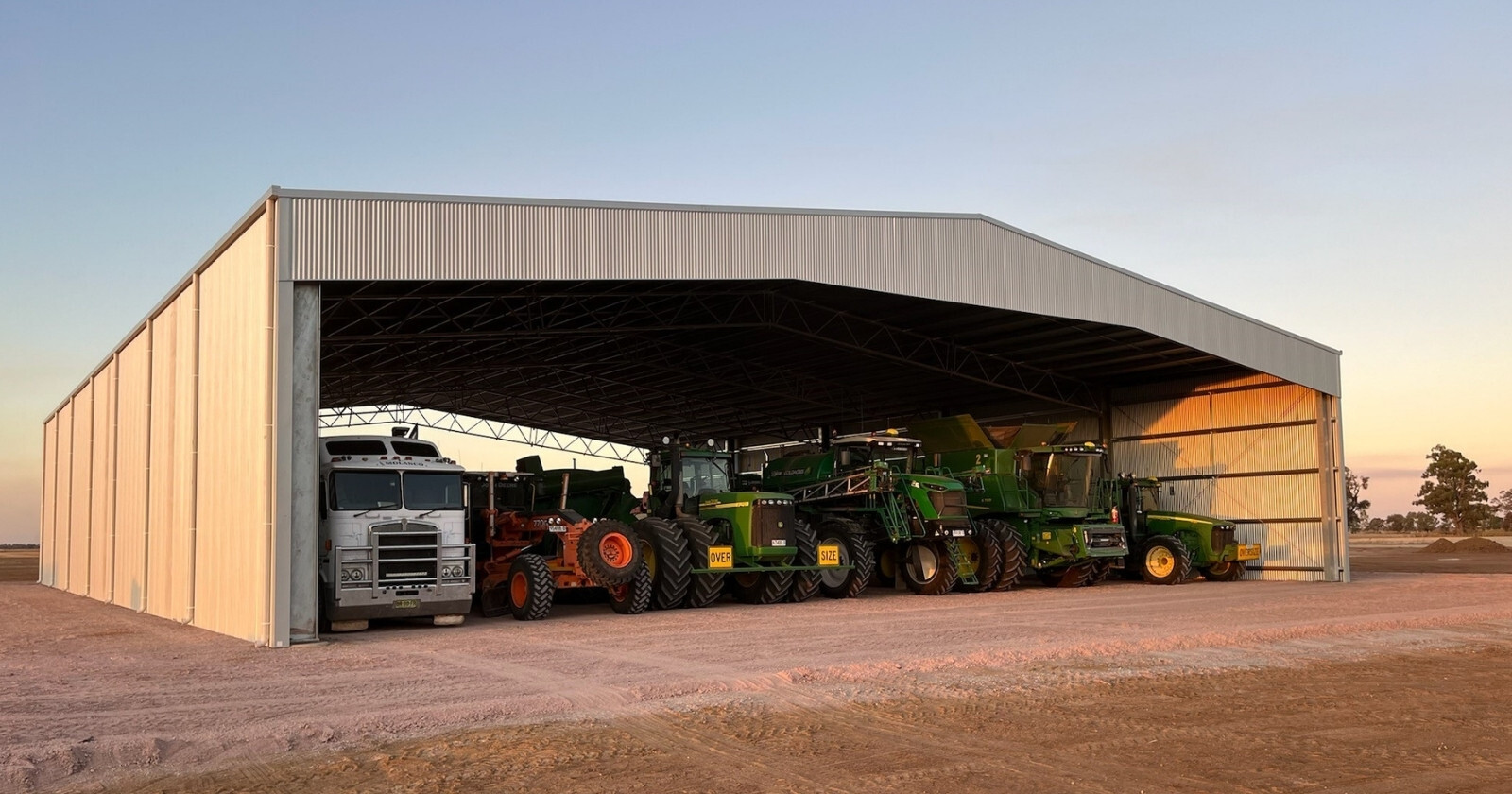
If you're pricing up a machinery shed this year, you've probably found that the answer is rarely a single number. Across the Machinery Sheds Australia market, a small open shed for a couple of tractors and a large enclosed build with a workshop fit-out can be worlds apart in cost, so the real starting point is working out what you need and how that translates into dollars.
The figures below cover Standwell’s machinery pricing cost in 2026: cost per square metre, how configuration changes things, and what pushes the total up or down.
Typical price range
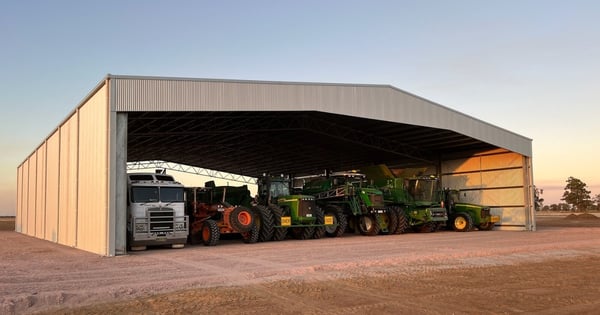
Most machinery sheds cost somewhere between $80,000 and $350,000. Where you sit in that range comes down to size, height, and how much of the shed you enclose. A modest open-fronted shed for everyday gear sits at the lower end, while a larger build with sliding doors, concrete walls, and a workshop area climbs towards the top.
Machinery sheds also tend to need more height and clear width than a basic storage shed (headers need headroom, spray rigs need width), which can nudge the cost up compared with a simple shed of the same floor area.
Cost per square metre
Square metre pricing is the easiest way to get a rough figure early on. As a guide, roof-only machinery sheds start from around $150 per square metre, while fully enclosed designs start from around $250 per square metre.
So a 24m x 15m roof-only shed (360 square metres) starts around $54,000, and the same footprint fully enclosed starts closer to $90,000. These are starting points rather than fixed quotes, because span, wall height, and door choices all move the number.
There are sensible ways to keep that figure in check without cutting corners on the structure itself. We've gathered the best of them in our guide to 5 ways to reduce the cost of your shed.

How configuration changes the price
How enclosed your shed is makes one of the biggest differences to the final cost. The more walls and doors you add, the more steel and labour go into the build, so the configuration you settle on sets the baseline.
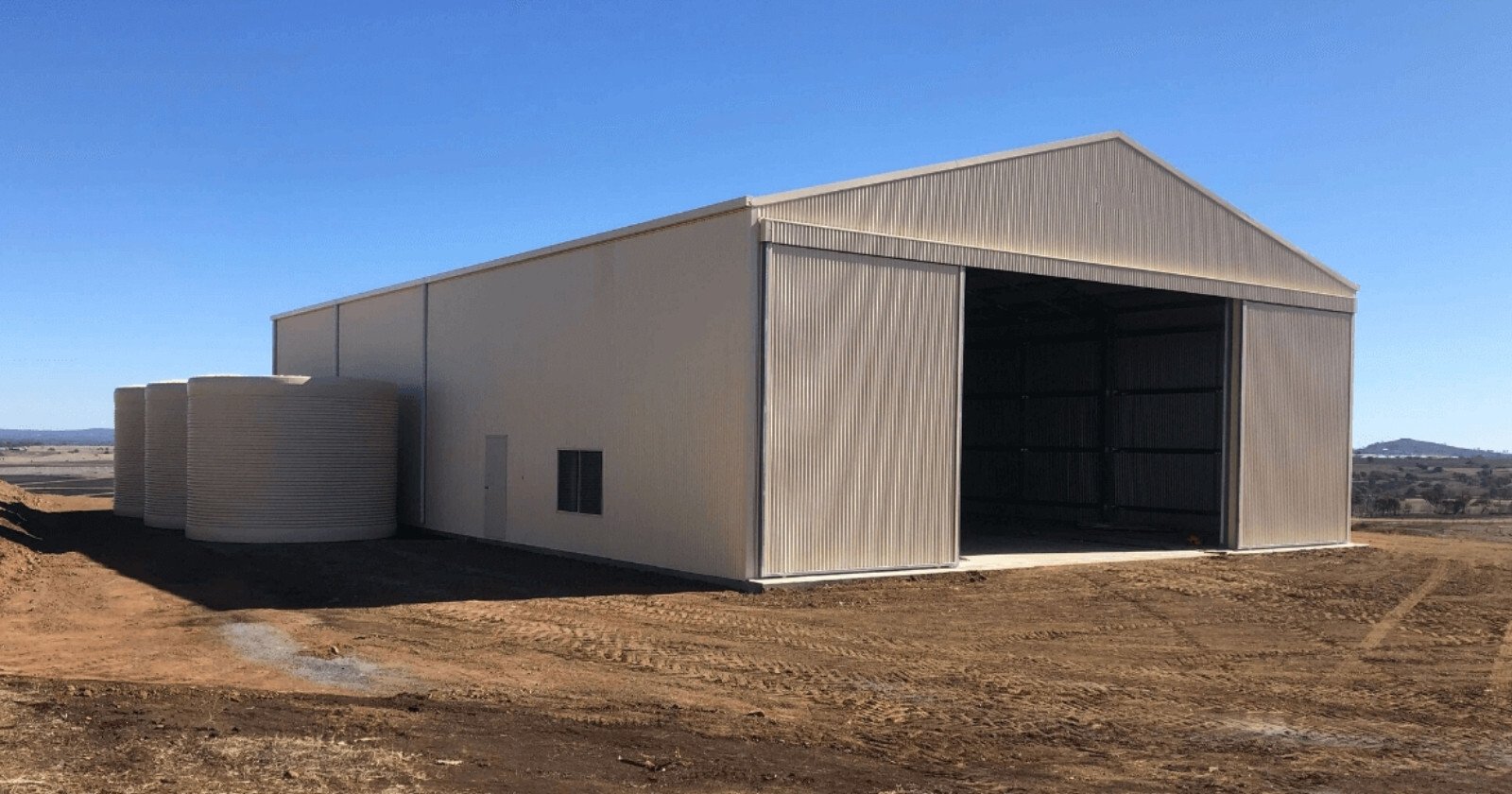
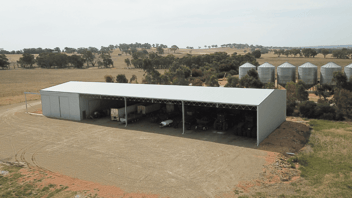
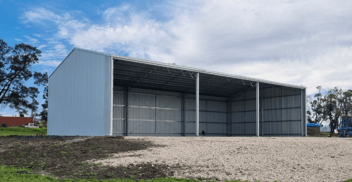
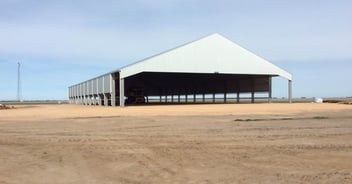
A three-sided shed (walls on three sides, open along one long side) is a popular middle ground, with solid weather protection and easy drive-in access for daily-use machinery. An open-ended shed encloses the two long sides but leaves both ends open, which suits run-through storage and keeps airflow up. A fully enclosed shed, with walls all round and lockable doors, sits at the top of the range, and it's the one to pick for valuable equipment, secure storage, or a workshop.
Plenty of farmers mix it up: open bays for the tractors they use daily, an enclosed section for tools and a workbench. You're not locked into one layout.
What drives the price up
On top of size and enclosure, a handful of factors move the total around:
-
Span and height: Wider clear spans (no internal posts to dodge when you're backing a header in) and taller clearances for big rigs use more steel, so they cost more.
-
Doors: Sliding, roller, and personal access doors all add to the total, and larger openings can cost more than smaller ones.
-
Cladding and walls: Steel walls are standard, while concrete panels at ground level add durability and cost.
-
Wind rating: Sheds in higher wind regions or cyclonic areas need heavier engineering.
-
Site and access: A flat, easy-to-reach site keeps costs down, while remote or awkward pads can add to delivery and labour.
-
Extras: Insulation, skylights, ventilation, awnings, and mezzanine floors all add up.
_11zon.png?width=1600&height=840&name=2%20(3)_11zon.png)
Budgeting for the whole job
The per-square-metre figures cover the shed itself, not everything around it. Concrete slabs or footings, earthworks, and site prep usually sit outside that price, and they can add a fair bit depending on your ground conditions. Most machinery sheds need concrete footings or a pad, so it's worth getting that priced alongside the shed.
Council approval is the other piece to plan for, as rural buildings generally need sign-off before you start. If the upfront cost is the sticking point, finance can spread the payments over time rather than landing in one hit. Find financial assistance options here.
Kit shed or custom build?
If you're happy to handle construction yourself, a kit shed can bring the cost down. Standwell's Durakit range offers pre-designed steel kits in eight sizes, using the same fabricated frames and hot-dip galvanised steel as our custom builds.
As a rough guide, open-ended Durakit machinery sheds start from $67,299 (incl GST) for a 32m x 15m x 6m model, with three-sided versions from $71,599 (incl GST) for the same size. Step up to a 40m x 21m x 6m kit, and you're looking at roughly $103,599 to $110,799 (incl GST), depending on the configuration.
A custom shed costs more once you factor in professional erection, concrete, and bespoke features, but you get a structure built exactly around your machinery and your workflow.
Getting your number
How much a machinery shed costs depends on your gear, your site, and how you'll use the space, so the surest way to land on a number is to map it out yourself. Design a shed to suit your machinery and explore the options with our free online shed builder.
.svg)