


-1.svg "Standwellbluelogo")
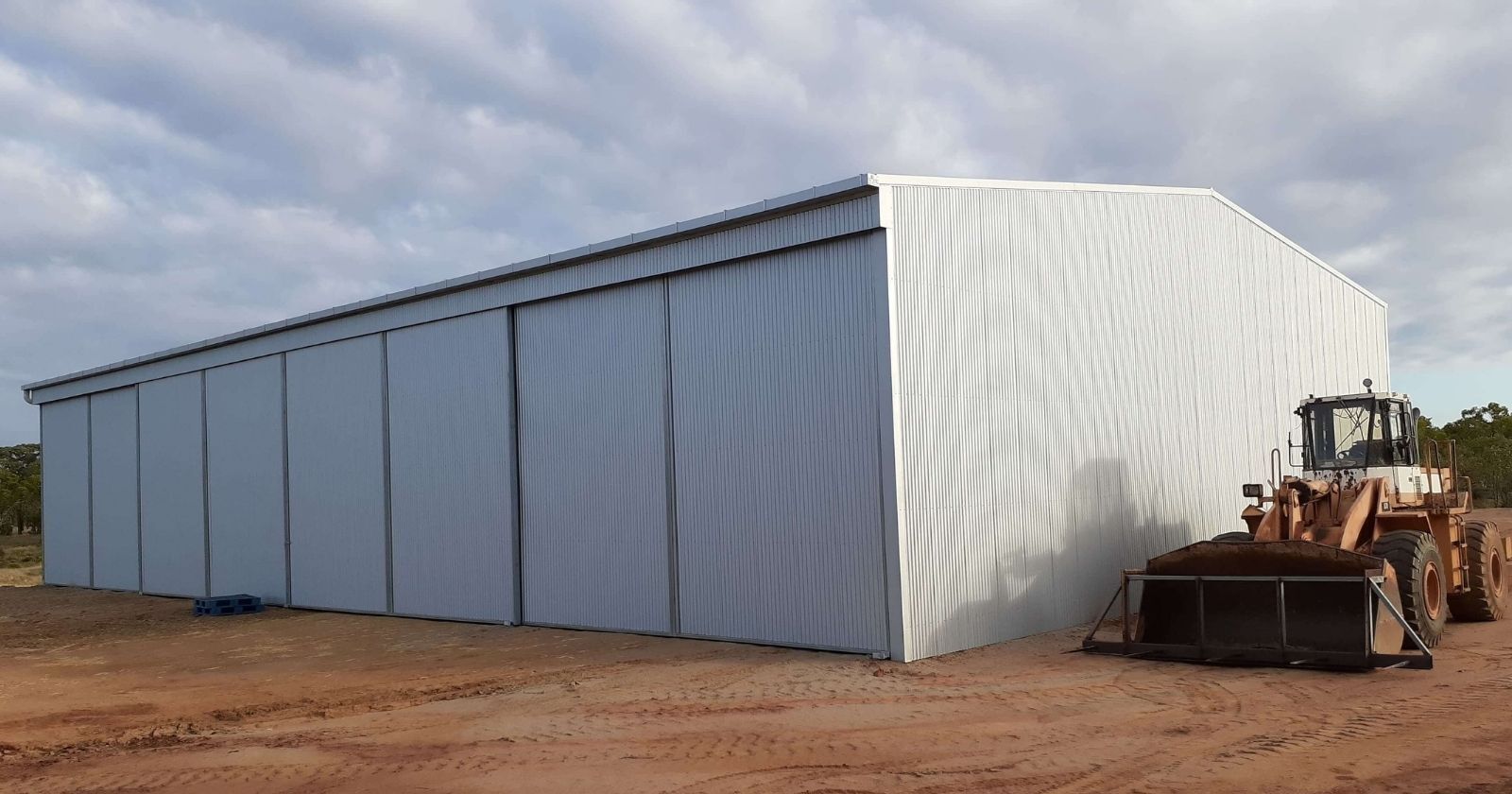
The most durable hay shed design for Australian conditions is generally a site-specific, engineered steel shed with a gable roof, good ventilation, effective drainage and enough protection from prevailing weather. For many Australian farms, an open-sided or three-sided configuration strikes a practical balance between airflow, weather protection and machinery access.
That said, the right design depends on where you are and what you're storing. Local wind conditions, rainfall, humidity, bushfire and flood exposure all play a part, as do the type and volume of hay and how the shed will be used day to day.
In other words, a durable hay shed should be designed around your site and your storage needs, rather than picked off a one-size-fits-all plan. Below, we cover the design features worth prioritising and how they change across Australia's different climates.
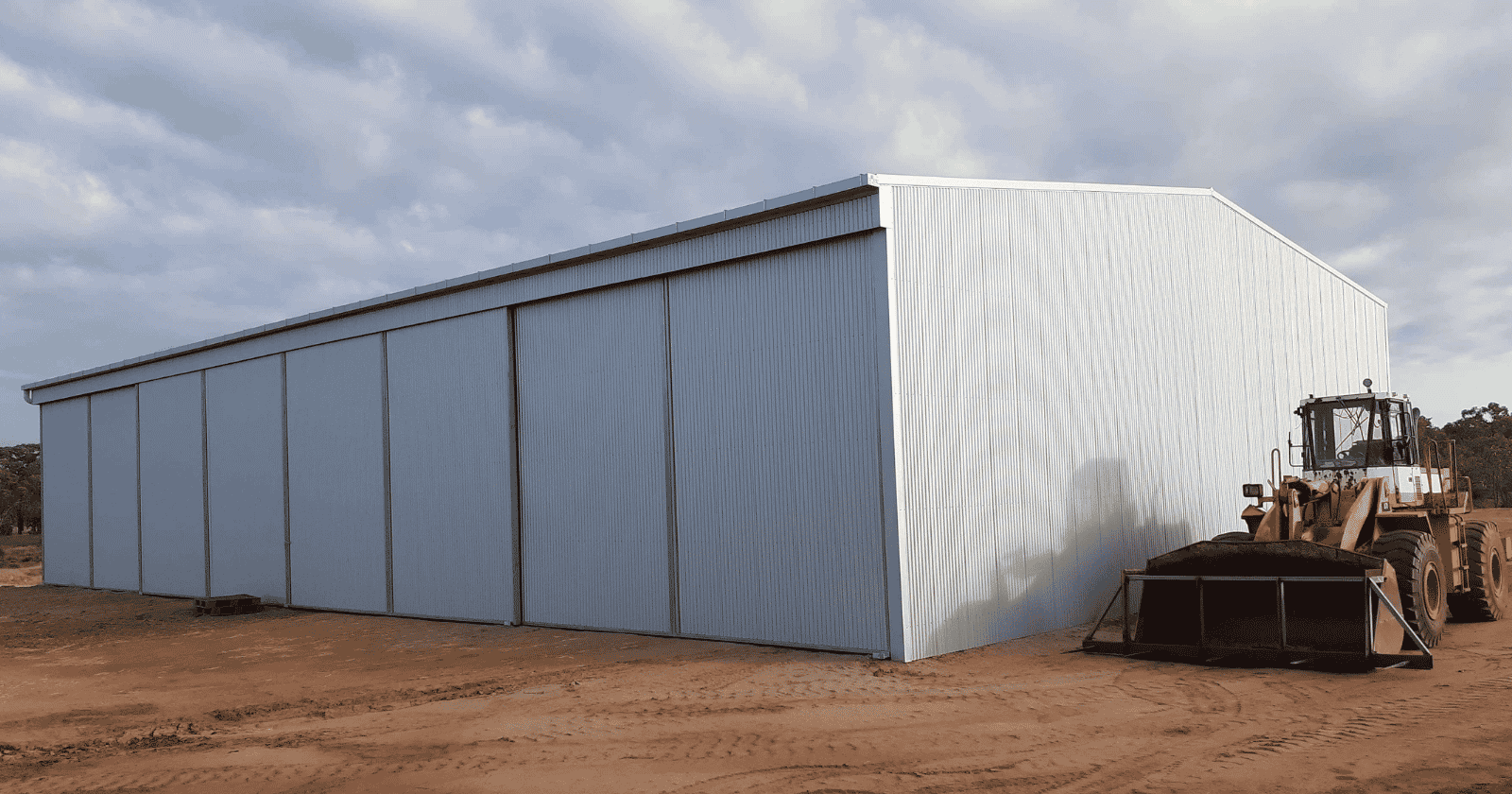
What makes a hay shed durable in Australian conditions?
Durability comes down to two things. The shed has to stand up to the weather for decades, and it has to keep your hay in good condition while it does. A shed that survives every storm but lets rain blow onto the stack hasn't done its job, and neither has one that keeps hay dry but starts rusting within a few years.
In practice, a well-built hay shed should have:
- A frame engineered for the site's wind region and loads, in line with Australian Standards
- Hot-dip galvanised steel or other corrosion protection suited to the environment
- A roof that sheds water quickly and overhangs far enough to keep rain off the stack
- Enough airflow to let heat and moisture escape from the hay
- A raised, well-drained floor so water runs away from the shed instead of under it
- Enough height and open span to stack and move hay safely
Moisture is the biggest enemy here. Damp hay loses feed value, grows mould and, in the worst cases, can heat up enough to spontaneously combust. Most of the design choices below come back to keeping water out and letting air through.
If you need hay storage up and running before next season, a pre-designed structural steel shed can be a smart option. Check out our Durakit range of kit sheds, available in three-sided and open-ended designs.

What is the best hay shed design for Australian farms?
There's no single design that suits every property, but the features below form a strong starting point for most Australian hay sheds.
Three-sided or open-sided shed
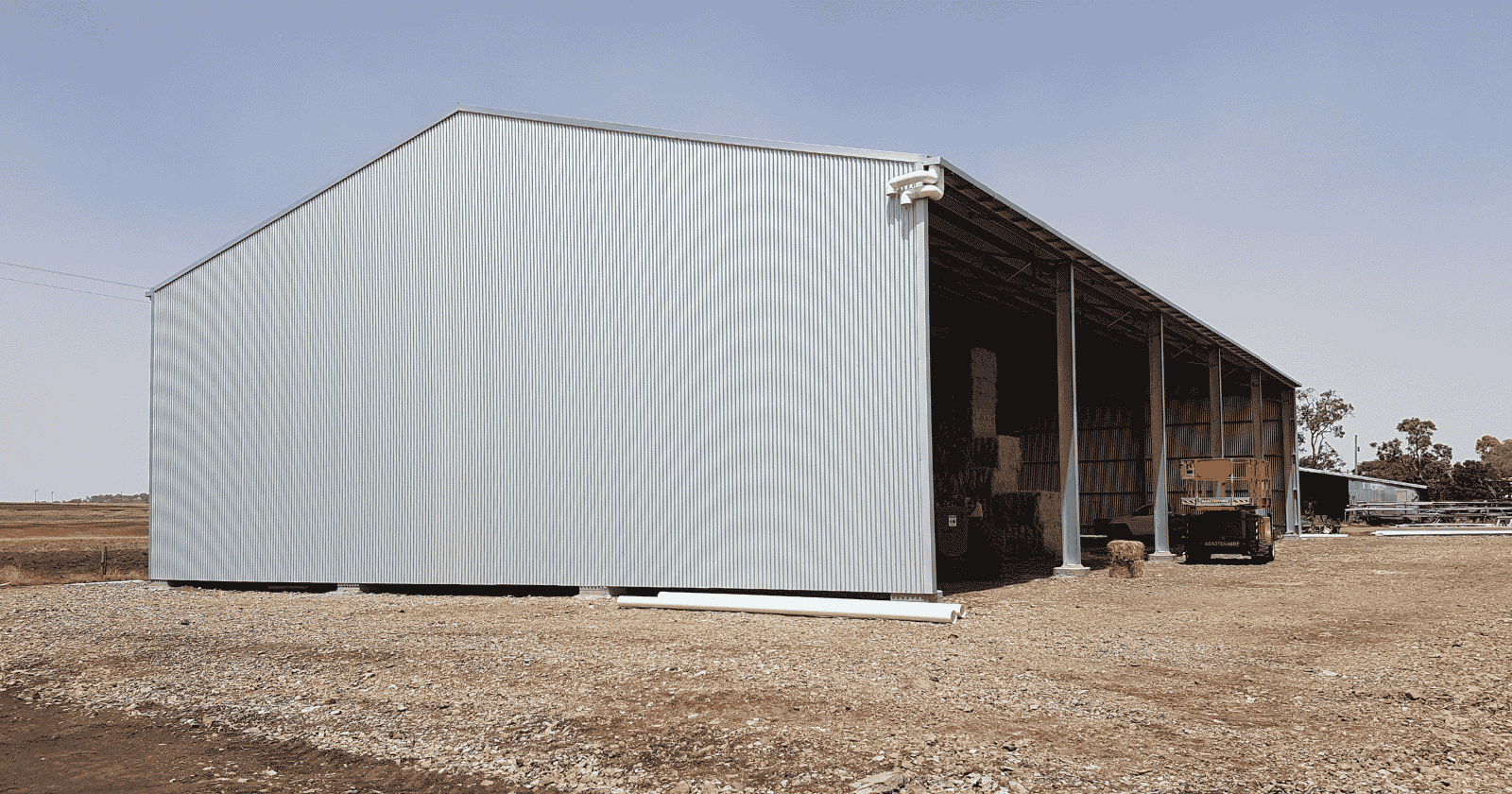
Open-sided (roof-only) and three-sided sheds are the most common hay shed configurations in Australia, and for good reason. They let air move freely through the stack, cost less to build than a fully enclosed shed and give tractors and loaders easy access from more than one side.
A three-sided shed generally has three enclosed sides and one open side for access, which helps stop wind-driven rain and dust reaching the hay. An open-sided shed suits drier areas or sites where access matters most. If you're unsure, ask about cleats so walls can be added later as your needs change.
Gable roof
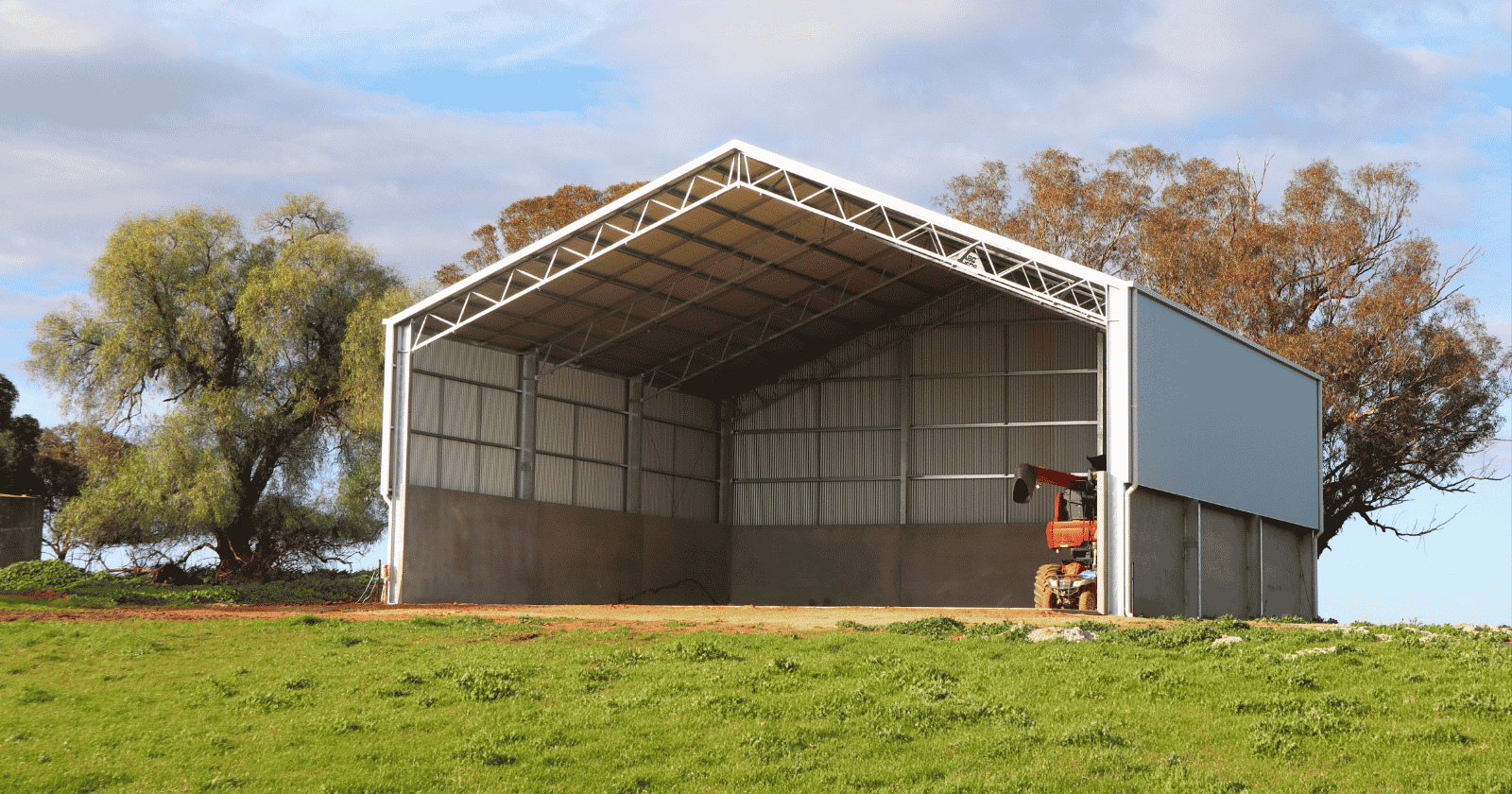
A gable roof, with two sloping sides meeting at a central ridge, is the go-to choice for hay sheds. It sheds water efficiently in both directions, handles wind loads well and gives you plenty of height down the middle of the shed for stacking.
Roof pitch and overhang both matter. A pitch suited to your rainfall moves water off quickly, while generous overhangs or awnings keep rain off the outer bales. Worth mentioning that ridge ventilation needs to be appropriately designed to allow airflow without increasing the risk of wind-driven rain entering the shed.
Galvanised steel portal frame
Steel portal frames are the backbone of a durable hay shed. Structural steel columns and rafters (rather than lightweight purlin framing) give you the strength to handle strong winds, wide clear spans and heavy loads, without internal posts getting in the way of machinery.
Hot-dip galvanising coats the steel in zinc inside and out, protecting it from rust for decades. That counts for a lot in humid, coastal and high-rainfall parts of Australia, which can be hard on unprotected steel. Steel also won't rot or attract termites, giving it a clear advantage over timber.
Raised, well-drained floor
Even the best roof won't save hay sitting in water. The shed should be built on a level pad raised slightly above the surrounding ground, with the site graded so water drains away from the shed during heavy rain.
Open hay sheds don't always need a concrete slab. A well-compacted gravel or crushed rock base is often enough, as long as it drains well. Some farmers also lay pallets or a moisture barrier under the bottom layer to stop those bales drawing moisture up from the ground.
High clearance and machinery access
Hay sheds need plenty of height. Eave heights of around 6m or more are common on farms stacking large square or round bales, giving loaders and telehandlers room to work without coming close to the roof.
Wide bays and clear spans also make loading and unloading faster and safer. Think about how trucks and machinery will move around the shed, which sides need open access and whether you'll want room to expand your storage down the track.
What type of hay shed is best for different Australian climates?
Australia's climate ranges from tropical in the north to alpine in the south-east, so a hay shed that works well in one region might struggle in another. The table below sums up the main design considerations for each set of conditions.
|
Australian conditions |
Hay shed design considerations |
|
Hot, humid regions |
Open or three-sided layout, roof ventilation, strong corrosion protection. |
|
Cyclone-prone areas |
Engineered for cyclonic wind loads, heavier frame, stronger connections and footings. |
|
Hot, dry inland areas |
Reflective roof sheeting, extra roof height, open sides, wall on the windward side for dust. |
|
High rainfall areas |
Suitable roof pitch, wide overhangs, gutters and downpipes, raised drained pad, weather-side walls. |
|
Coastal areas |
Hot-dip galvanised frame, sheeting rated for marine environments, regular washdowns. |
|
Bushfire-prone areas |
Non-combustible steel, cleared surrounds, separation from other buildings, water access. |
|
Flood-prone areas |
Highest practical ground, raised pad, clear of natural water flow paths. |
|
Cold and alpine regions |
Designed for snow loads, weather-side walls, ventilation to limit condensation. |
Hot, humid regions
In the tropics and subtropics, humidity keeps moisture in the air and in your hay. An open-sided or three-sided shed with good roof ventilation lets heat and damp air escape, reducing the risk of mould. Corrosion protection deserves extra attention too, since warm, wet conditions speed up rust on poorly protected steel.
Cyclone-prone areas
Much of coastal northern Queensland, the Northern Territory and Western Australia falls into cyclonic wind regions. Sheds here need to be engineered for far higher wind loads, which usually means heavier steel, stronger connections and more substantial footings. Large openings also change how wind pressure acts on a building, so the layout should be designed with this in mind.
Hot, dry inland areas
The space under a steel roof can get much hotter than the air outside. Reflective or lighter-coloured roof sheeting, a taller roof and open sides all help keep the stack cooler. Dust is often a bigger worry than rain inland, so a wall on the windward side can be worthwhile.
High rainfall areas
Where heavy rain is common, focus on getting water off and away from the shed. A suitable roof pitch, wider overhangs, gutters and downpipes and a raised, well-drained pad all help. A wall or two on the weather side will stop driving rain from reaching the stack.
Coastal areas
Salt spray is tough on steel. Sheds near the coast benefit from hot-dip galvanised framing and roofing products rated for marine environments. Hosing down surfaces that don't get rinsed by rain, such as the undersides of eaves, will also help extend the shed's life.
Bushfire-prone areas
Hay is highly flammable, so fire risk deserves serious thought. Steel is non-combustible, but site planning matters just as much: keep the surrounds clear of long grass and debris, separate the hay shed from homes and machinery sheds, and make sure fire crews have water and vehicle access. Check with your local council and rural fire service, as some areas have specific requirements.
Flood-prone areas
Position the shed on the highest practical ground and raise the pad above known flood levels where possible. Good drainage and keeping the shed clear of natural water flow paths will reduce the chance of losing a season's worth of feed.
Cold and alpine regions
Tablelands and alpine areas may need sheds designed for snow loads, which affects roof pitch and frame size. Walls on the prevailing weather side protect hay from sleet and cold winds, and ventilation still matters to limit condensation forming under the roof.
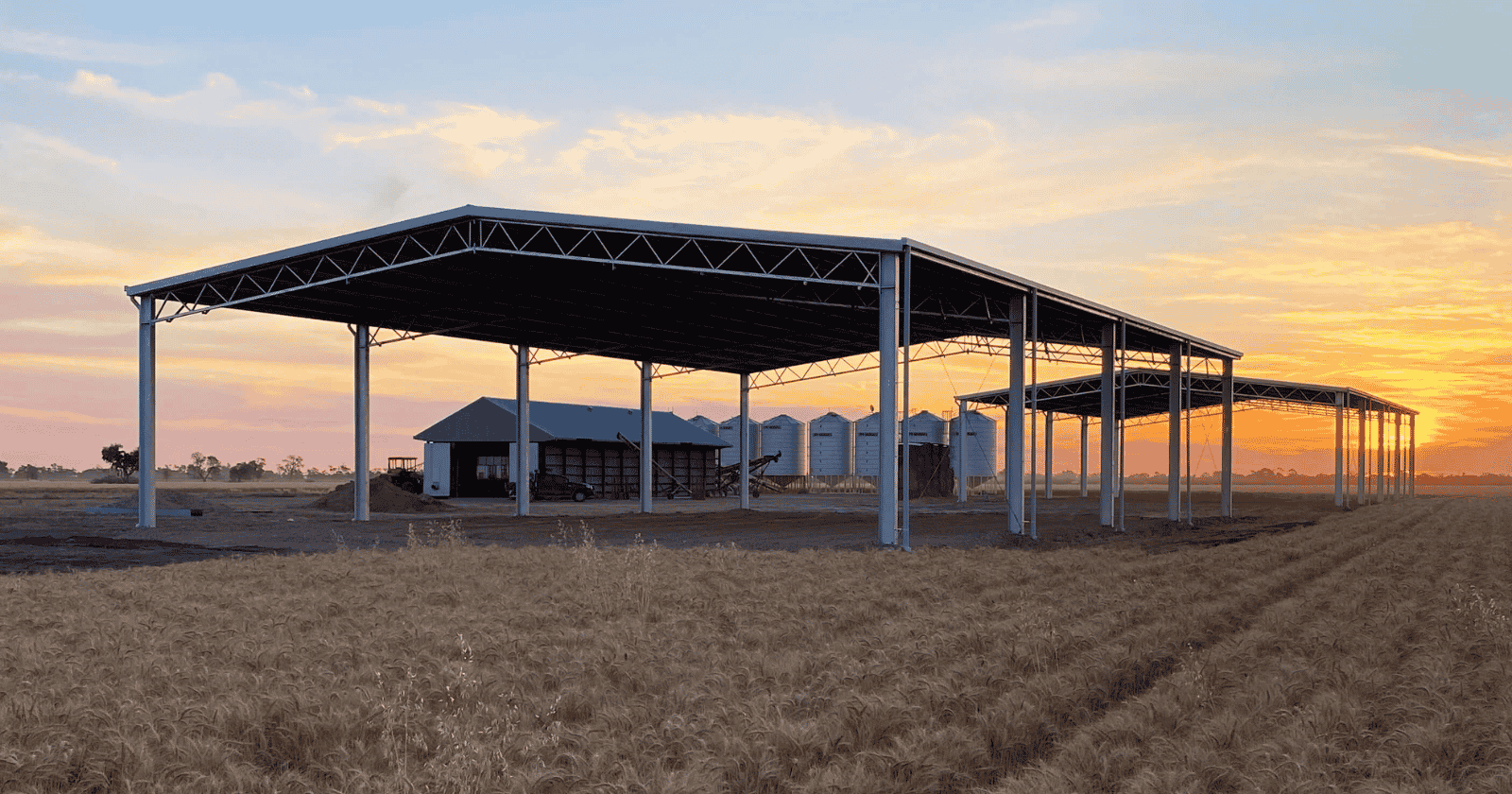
Standwell project: twin hay sheds in Moree, NSW
When a Moree farm's hay production outgrew its existing storage, the owners needed a practical way to keep large volumes of hay in good condition all year round. We designed and built two matching roof-only hay sheds, each measuring 32m x 21m with a 6m eave height.
Both sheds feature a gable roof with a 7.5° pitch, which sheds water effectively while leaving plenty of storage room underneath. The frames use hot-dip galvanised 360 UB columns and open web joist trusses, topped with Zincalume roof sheeting for solid weather protection without the cost of full enclosure.
With open sides, machinery can reach the hay easily, and air moves freely through the stack. We also fitted cleats on one long side and one gable end of each shed, so walls can be added later if the farm's needs change. You can read more about the Moree hay shed project here.
Choosing the right hay shed for your property
The best hay shed design for your farm starts with your site. Wind, rainfall, humidity, fire and flood risk all shape how the shed should be built, and so does the way you store and move your hay.
For most Australian farms, a galvanised steel portal frame with a gable roof, an open or three-sided layout, a well-drained pad and plenty of clearance is a strong foundation. From there, the details can be tailored to suit your climate and the way you work.
Our team designs and manufactures hay sheds built around Australian farms and conditions. Get a quote on a custom hay shed for your property today.

Frequently asked questions about durable hay shed design
.svg)