


-1.svg)
.jpeg)
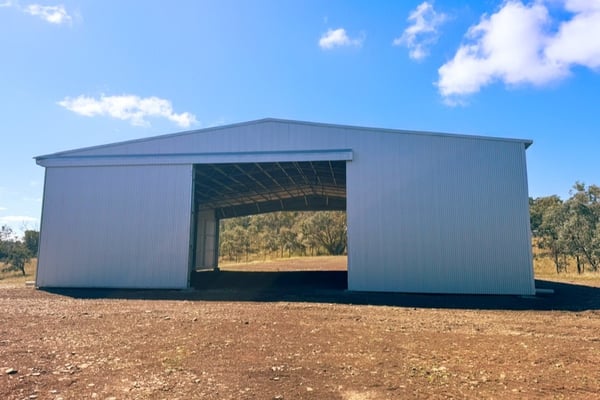
Your shed doors need to suit the way you actually use the building. Machinery size, access frequency, security, available clearance, weather protection, and budget can all affect which option is practical.
This guide compares the main shed door options, how each one works, and what to consider before choosing the right setup for your shed.
Summary of the different shed door options
Roller doors are a strong choice when security and convenient access matter most, while sliding doors work well for wide machinery openings and simpler maintenance. Tilt doors suit very large clear openings, barn doors are a specialised equestrian option, and PA doors provide separate pedestrian access.
What shed door options are available?
The main shed door options are roller doors, tilt doors, sliding doors, barn doors, and Personal Access (PA) doors. You can also combine door types, such as using a roller or sliding door for machinery and a PA door for everyday pedestrian access.
The best option depends on what needs to pass through the opening and how the shed will operate once it is built.
Shed door options compared:
|
Door type |
Best suited to |
Main advantage |
Main drawback |
|
Roller door |
Commercial sheds, industrial sheds, warehouses and factories |
Security, weather protection and remote access |
Higher purchase and maintenance costs |
|
Tilt door |
Large clear openings, particularly aircraft hangars |
Can span large distances and provide a clear gable opening |
High cost |
|
Sliding door |
Farm machinery sheds and aircraft hangars |
Wide openings, low maintenance and straightforward repairs |
Does not seal as well as a roller door and is difficult to motorise |
|
Barn door |
Equestrian buildings |
Suitable for horses and visually appealing |
Specialised and not suited to applications requiring high security |
| Personal Access (PA) door | Pedestrian access to machinery, commercial and industrial sheds | Provides a dedicated entrance without opening the main machinery door |
Cannot accommodate vehicles, machinery or large equipment |
Roller doors
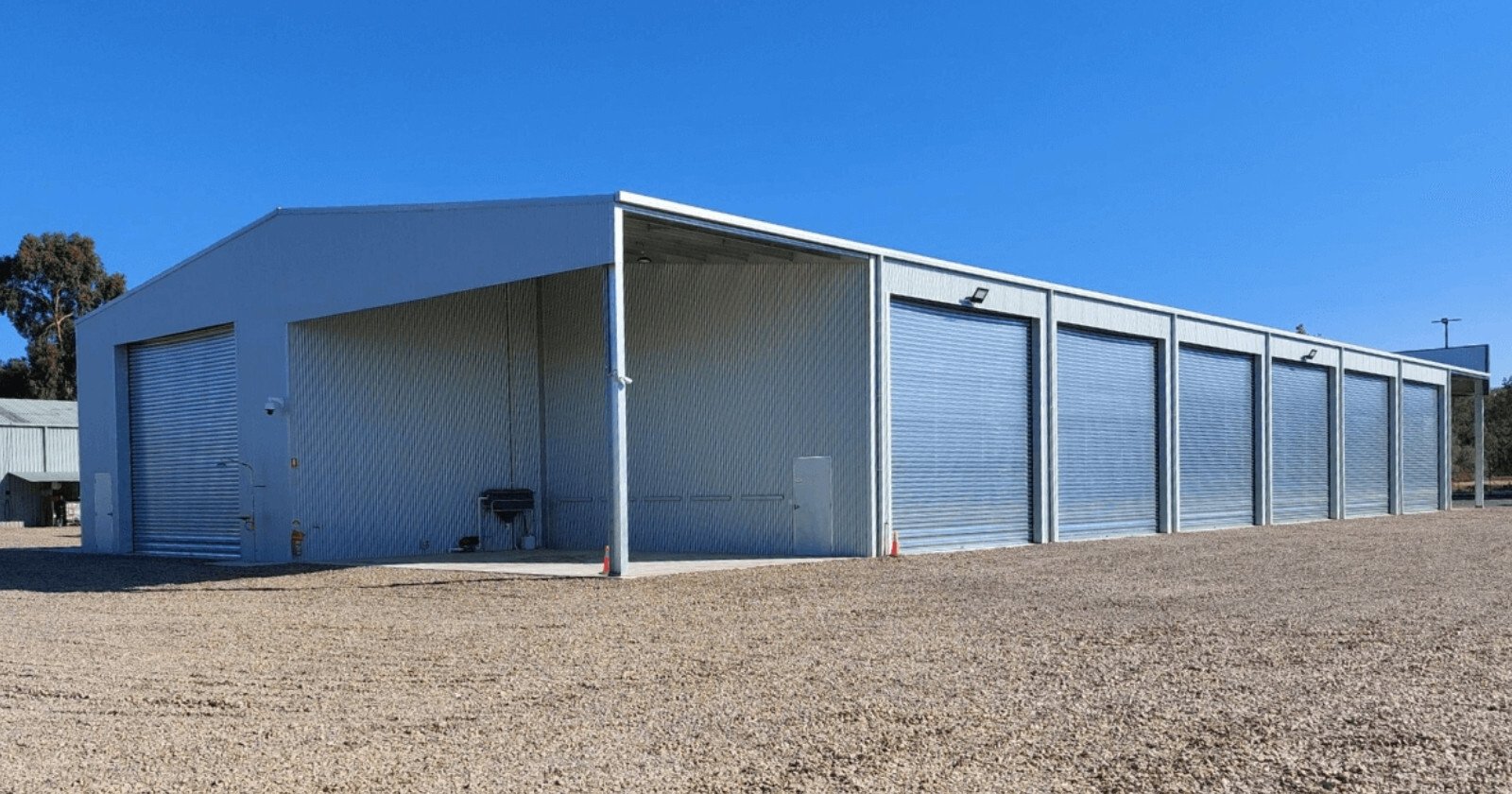
Roller doors are a practical option when you need secure, weather-protected access without taking up space beside the opening. They are commonly used on commercial and industrial sheds, warehouses, and factories.
A roller door is made from a continuous profiled sheet that rolls vertically above the opening. This means multiple bays can have roller doors without each door needing wall space to slide into.
Roller doors can also be fitted for remote operation, which can make frequent vehicle access easier.
The trade-off is that they have more moving parts than sliding doors. Maintenance and repairs can therefore be more involved, and wider openings require additional engineering.
A basic shed roller door starts at around $3,000, while the widest options can reach around $50,000. You also need sufficient clearance above the opening to accommodate the door.
For a closer comparison, read our guide to roller doors vs sliding doors.
Tilt doors
Tilt doors are designed for buildings that need a large, unobstructed opening, particularly aircraft hangars.
They are mounted on a spring-balanced hinge system and open outwards and upwards. Hydraulics may also be incorporated to make regular operation easier.
The main benefit is the ability to span large distances while keeping the gable opening clear.
The main drawback is cost. Once engineering and materials are included, tilt doors can cost around $10,000 to $100,000 depending on their size.
We do not use or recommend tilt doors because the cost of the tilt panel becomes very high across the large spans we typically work with.
Sliding doors
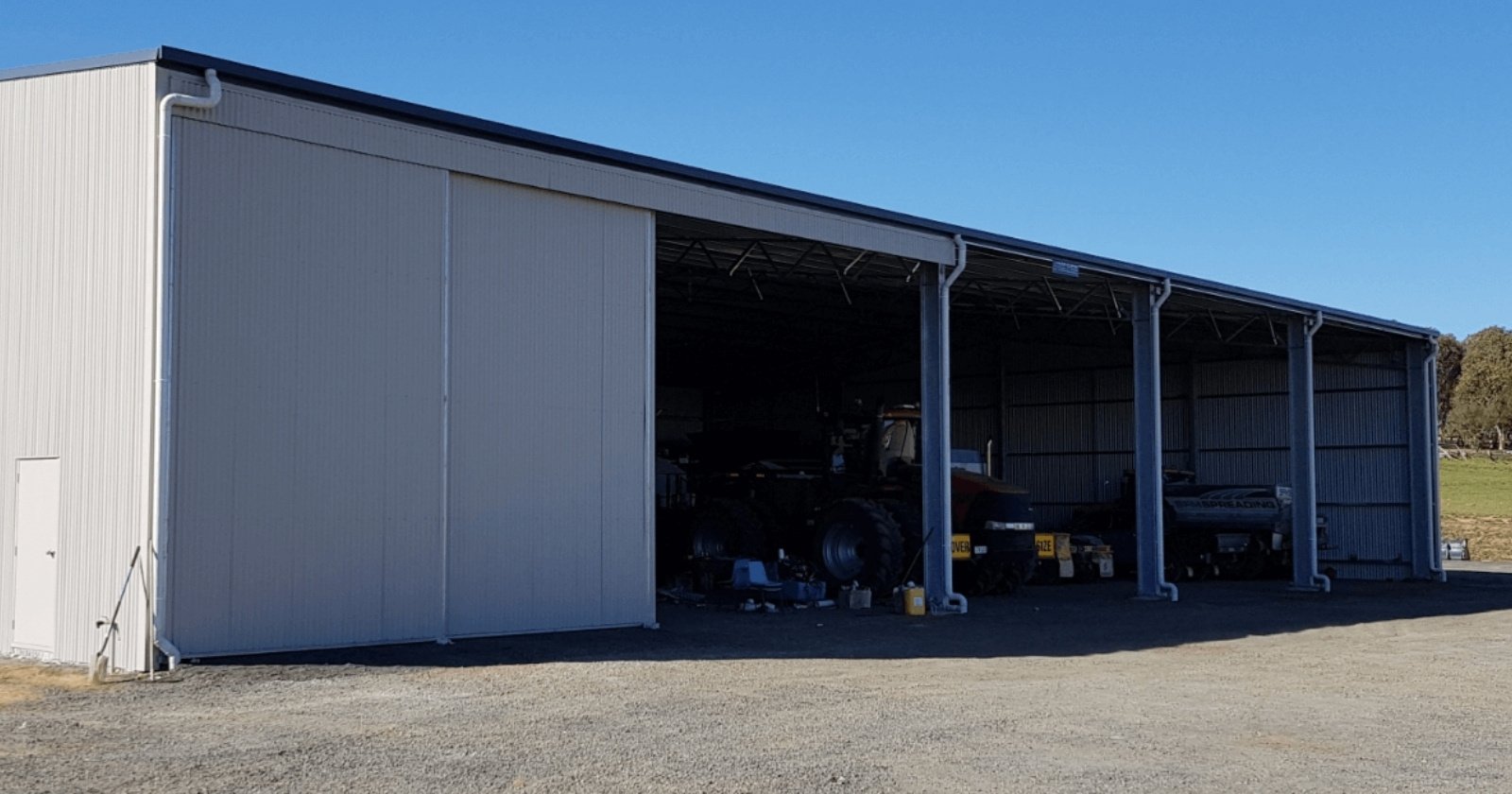
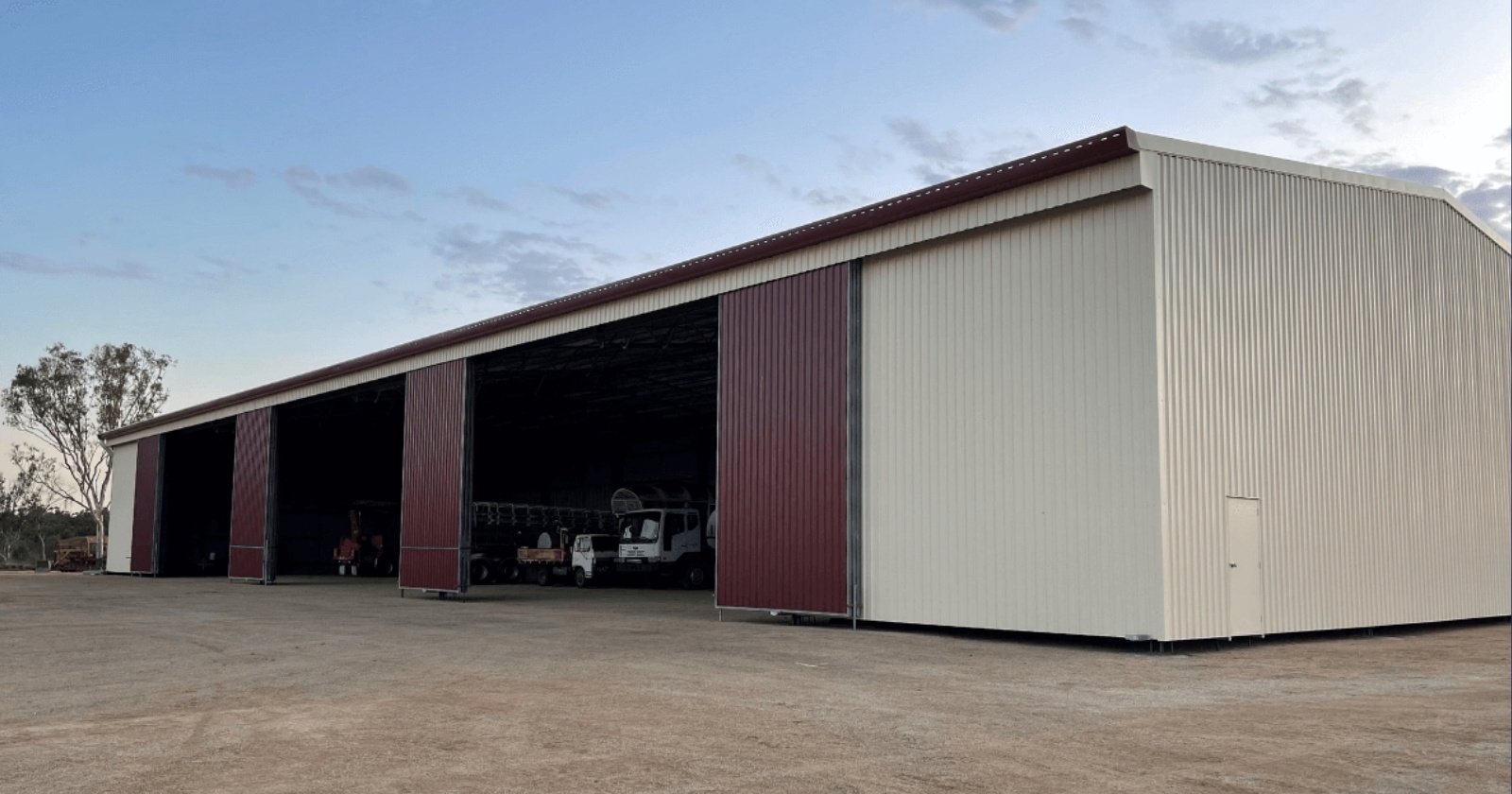
Sliding doors are well suited to farm machinery sheds and other buildings that need wide, straightforward access.
The door moves horizontally along a rail or track, so you need enough wall space beside the opening for the panels to slide into.
Sliding doors have several practical advantages:
- Low maintenance
- Straightforward repairs if damaged
- Easy installation after the shed has been built
- Large opening spans
- Ability to open as wide as the shed when outriggers are used
Their main limitation is sealing. They do not seal as effectively as roller doors and are also more difficult to motorise.
A basic sliding door can start at around $3,000 and reach approximately $20,000, depending on the opening span, number of bays, and whether a double or triple track is required.
Barn Doors
Barn doors are a specialised option most suited to equestrian buildings.
They hang from rollers on a track above the opening and slide flat along the side of the building rather than swinging outwards.
Their main advantages are appearance and suitability for horse access. However, they are less appropriate for machinery sheds or commercial buildings where stronger security is required.
Standwell does not currently supply barn doors.
Personal Access (PA) doors
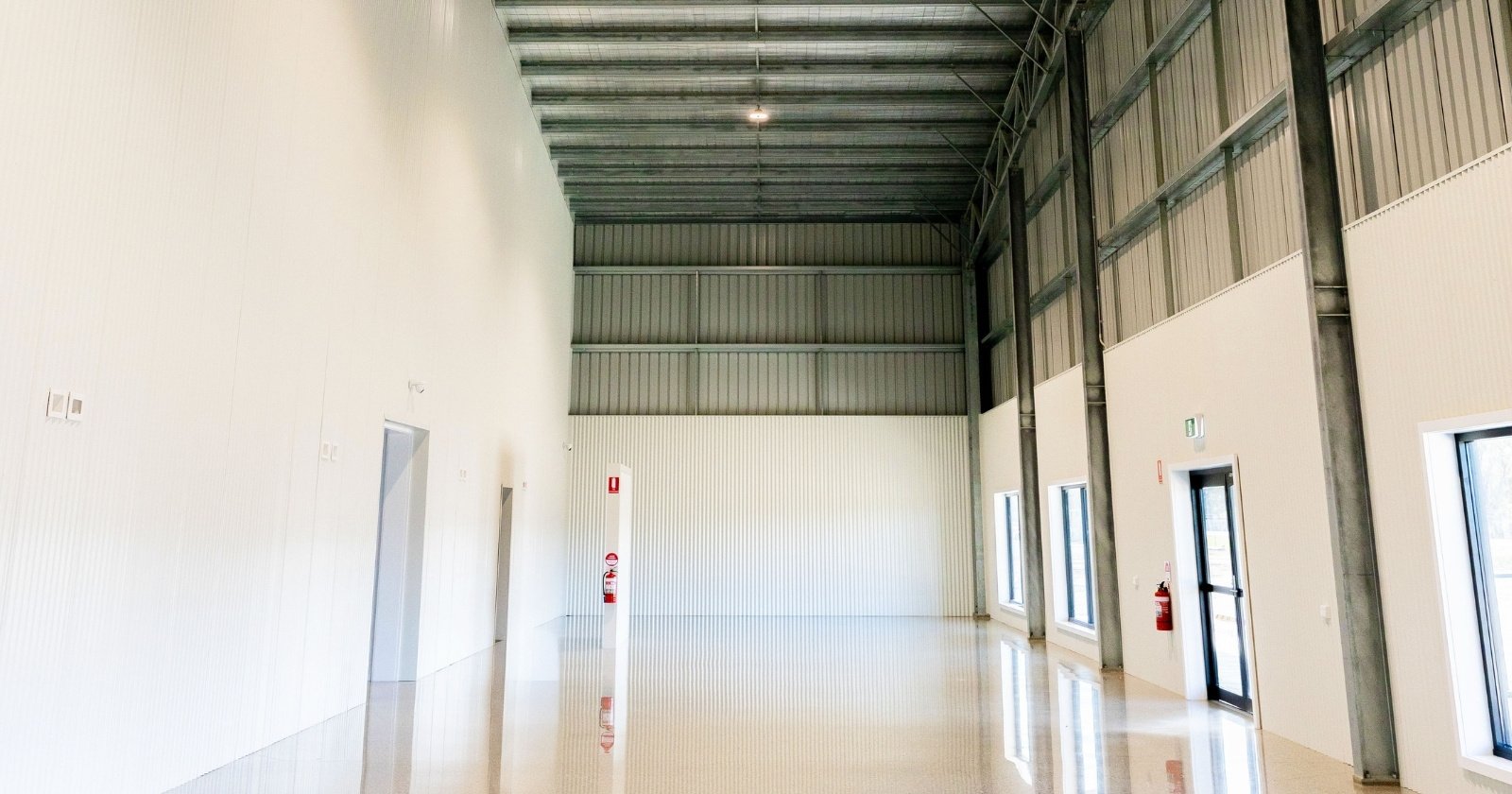
A Personal Access or PA door gives you a separate pedestrian entrance without requiring the main machinery or vehicle door to be opened.
This can be particularly useful on machinery sheds, workshops, commercial buildings, and other sheds where people need regular access throughout the day.
PA doors can:
- Provide dedicated pedestrian access
- Keep the main machinery door closed when it is not needed
- Help separate people from vehicle access areas
- Provide secure everyday entry
They are designed for people rather than machinery, so they work alongside a larger roller or sliding door rather than replacing one.
We can include PA doors as part of your shed design. The final cost depends on the overall shed specification and how many PA doors you need.
How do you choose the right shed door?
Choose your shed door by working backwards from how the building will be used. Start with the largest vehicle or piece of equipment that needs access, then look at clearance, frequency of use, security, and maintenance.
Check the opening size first
Your door needs to comfortably accommodate the largest vehicle, machine, or item you plan to store.
If you need a particularly wide opening for farm machinery, a sliding door may be more practical. If the opening is smaller and security is more important, a roller door may suit the building better.
Consider how often you need access
Frequently used entrances need to be easy to operate.
Remote-controlled roller doors can simplify regular vehicle access, while a wide sliding door may make it easier to manoeuvre large machinery. Adding a PA door can also reduce how often you need to operate the main door.
Decide how much sealing and security you need
Roller doors generally provide better weather protection and security than sliding doors.
If those are key priorities, a roller door may be worth the additional complexity. If wide access and simpler maintenance matter more, a sliding door may be the better fit.
Allow for clearance and maintenance
Roller doors need space above the opening, while sliding doors need space along the wall.
You should also consider future repairs. Sliding doors use a relatively simple system, while roller and tilt doors involve more moving parts or engineering.
Plan your shed access before you build
Your doors should be planned as part of the overall shed layout, not treated as an afterthought.
Think about where vehicles will approach the building, how machinery will move through the space, where people need to enter, and whether door clearance will affect adjoining bays or work areas.
We design structural steel sheds around the practical requirements of each project, including farm sheds, machinery sheds, workshops, commercial and industrial buildings, aircraft hangars, and other custom structures.
Explore our shed options or contact our team to discuss the right access and door configuration for your project.
FAQs
.svg)