


If you operate a farm, there’s no doubt that you will have farm machinery and equipment on-site that you use on a daily basis. Farm machinery is a big investment for any farmer so it’s important that this machinery remains as protected as possible. While the weather in Australia can be temperamental and a cause for concern at any time of the year, the risk of potential trespassers is also enough of a worry for any farmer to want to keep their valuable machinery safe and secure. One of the easiest and most simple ways to keep your machinery and equipment safe is to invest in a farm machinery shed.
There are many different styles and designs of farm sheds and it’s important to consider exactly what you will use your shed for and how you will use it, before you get started with the shed build. As experts in rural and industrial buildings, we’ve outlined some essential factors that you should consider before you get underway with your new shed.
Key takeaways: Designing a farm machinery shed
- Start by listing the machinery and equipment you need to store, including their dimensions.
- Allow enough room to move machinery around inside the shed and consider future equipment purchases.
- Consider local weather conditions when deciding where to position your shed and which walls to enclose.
- Choose bay sizes based on the dimensions of your machinery and the access required.
- Trussovers can provide additional roof support where very wide bays are used.
- Decide whether open sides or a fully enclosed, lockable shed better suits your access and security requirements.
- Consider sliding or rolling doors and personal access doors to make entering and exiting the shed easier.
What machinery will you store in your shed?
Probably the most important consideration for anyone about to embark on building a new farm machinery shed, is to think about how much machinery and equipment you will need to store in the shed. As a starting point, it may help to make a list of all of the machinery you’d like to store in the shed. From there you can note down the size of each piece of machinery and how much space it will likely take up giving you a good idea of how big (or small) you will need your new shed to be.
While there should be enough room to safely secure your machinery, you should also allow for some extra room should you invest in another piece of equipment. You will also need to consider whether you’ll have enough room to move around the shed, once your machinery is stored inside. If you think you may find it hard to move around all of your various pieces of equipment once they’re all safely secured inside, then you’ll want to reconsider the size of your shed.
Future-proofing your shed now will save you money in the long run and will ensure that you won’t have to spend twice the money building another farm machinery shed when you run out of room!
Check out our free farm sheds brochure for shed inspiration >>
Consider the weather
Depending on where you live in Australia, you can face very harsh weather conditions – from harsh sun and incredibly hot temperatures to heavy rain and high winds, it’s important to make sure any structures you have on your farm can withstand all types of weather. One way to mitigate this is by carefully planning the orientation of your shed to consider the direction that the weather comes from – this is particularly important if your shed won’t be fully enclosed.
Make sure that your shed is pointed away from the incoming direction of high winds and rain to ensure the best protection possible for your farm machinery. If you live in an area prone to flooding, you may also want to consider building your shed on higher ground. You may also want to consider sheeting the walls that are most exposed to the weather, for extra protection.
Size of the bays
Most farm machinery sheds can be custom-designed to meet your specific requirements. The sizing of bays and how many you include in your shed is something many farmers will customise based on how much space they need in their shed, and the size of the machinery they wish to store inside.
A bay is essentially the amount of space between the columns inside the shed so the wider that these are, the more space you will have to store your machinery inside. This can come in very handy if you have large tractors or trucks that you will need to house in your farm machinery shed. There are restrictions on how far apart bays can be as they provide the structural support for the roof but if you know what’s going inside the shed, then a specialist building firm can figure out a way to position structural elements so you get the access required while maintaining strength.
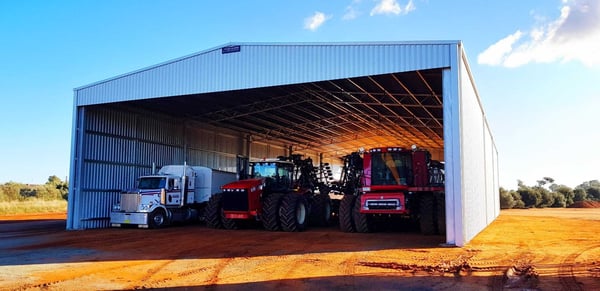
If you're looking to store large machinery items and you're concerned about supporting the roof of your shed, trussovers can always be used to provide extra structural support to the roof. Like the example below, trussovers have been added to this combined farm shed for optimum support, due to very wide bays.

This combined hay and machinery shed with wide bays utilises trussovers to support the roof.
Open sides or fully enclosed shed?
One of the most essential considerations for any new farm machinery shed is how many walls you will choose to include in your shed. If you will be accessing your shed frequently and driving machinery in and out you may want to consider removing a wall or two to make access easier. If security is more of a concern (which it tends to be with a lot of farmers we speak to), we would encourage you to consider a fully enclosed and lockable farm machinery shed.
A secure farm shed will not only help to protect from trespassers and potential theft, but it will also help to keep your machinery safe from harsh weather conditions. If you’re concerned about being able to get large machinery out easily, sliding or rolling doors can be easily fitted. And with the option of adding a personal access door to the shed, getting into your shed will be a breeze.
Farm machinery shed planning checklist
Before finalising your farm machinery shed design, work through these considerations:
1. Machinery and storage requirements
- List all machinery and equipment you need to store.
- Record the dimensions of each item.
- Allow enough space to move machinery around inside the shed.
- Consider whether you may purchase additional equipment in the future.
2. Weather and site conditions
- Consider the direction of prevailing wind and rain.
- Decide how the shed should be positioned to protect stored machinery.
- Consider whether higher ground is appropriate if your property is prone to flooding.
- Identify which walls may need additional sheeting for weather protection.
3. Bay sizes and structural support
- Choose bay widths based on the dimensions of your machinery.
- Consider whether large tractors, trucks or other equipment need wider openings.
- Discuss structural support requirements with your shed designer.
- Consider whether trussovers may be needed for very wide bays.
4. Open sides or enclosed construction
- Decide how frequently you'll need to drive machinery in and out.
- Consider whether open sides would make access easier.
- Assess your security requirements.
- Decide whether a fully enclosed and lockable shed is more suitable.
5. Doors and access
- Consider sliding or rolling doors for large machinery.
- Check that openings are suitable for equipment such as headers and boom sprays.
- Consider adding a personal access door for everyday entry.
Design a farm machinery shed around your equipment
From large tractors and trucks to headers and boom sprays, your farm machinery shed needs to provide the space and access your equipment requires.
Standwell designs custom farm machinery sheds with bay openings of up to 16 metres, along with options for sliding doors, open-gable ends and fully enclosed bays.
Ready to get started? Get in touch now to request a quote or talk to us today to discuss your farm machinery shed needs.
Want to take a look at farm machinery sheds we’ve completed previously? Check out our free farm sheds brochure here.
Frequently asked questions about farm machinery sheds


