


-1.svg)
Choosing between roller doors and sliding doors is about more than just design. The door you choose affects how easy your shed is to access, how secure it is, how well it seals, and how practical it is for everyday use.
For most farm sheds, sliding doors are the better choice when wide access and low maintenance are the priorities. For commercial, industrial, and storage sheds, roller doors are usually the better choice when security, sealing, and remote access matter more.
Summary of contents (TL;DR)
Sliding doors are usually best for farm machinery sheds because they can provide wider openings, are simple to maintain, and are cheaper to repair if damaged.
Roller doors are usually best for commercial and industrial sheds because they provide better security, better sealing, and can be fitted with remote access.
If your shed needs wide machinery access, choose sliding doors. If your shed needs secure, weather-protected access, choose roller doors.
Are roller doors or sliding doors better for sheds?
Sliding doors are better for farm and machinery sheds where wide access, simple operation, and low maintenance are the main priorities. Roller doors are better for commercial and industrial sheds where security, sealing, and remote access are more important.
The best choice comes down to how the shed will be used. A machinery shed needs easy access for large vehicles and equipment. A commercial or industrial shed often needs stronger protection, better sealing, and more controlled access.
For farm sheds, sliding doors are often the practical choice. For commercial and industrial sheds, roller doors are often the stronger option.
Roller doors vs sliding doors: quick comparison
|
Factor |
Choose sliding doors if... |
Choose roller doors if... |
|
Shed type |
You are building a farm, rural, or machinery shed |
You are building a commercial, industrial, warehouse, or factory shed |
|
Access |
You need a wide opening for large machinery |
You need convenient vehicle or staff access |
|
Security |
Security is useful but not the top priority |
Security is a major requirement |
|
Weather sealing |
Full sealing is not essential |
You need the door to seal more effectively |
|
Maintenance |
You want a simple, low-maintenance setup |
You are comfortable with more moving parts |
|
Repairs |
You want cheaper repairs if the door is hit |
You can allow for more expensive repairs if needed |
|
Opening width |
You need the door to open across a large span |
A standard roller door opening is enough |
|
Clearance |
You have room for the door to slide sideways |
You do not have horizontal space beside the opening |
|
Remote access |
Remote operation is not important |
You want the option to open the door from outside |
|
Cost |
You want a practical door option from around $3,000 to $20,000 |
You can allow for a door option from around $3,000 to $50,000 |
When should you choose sliding doors?
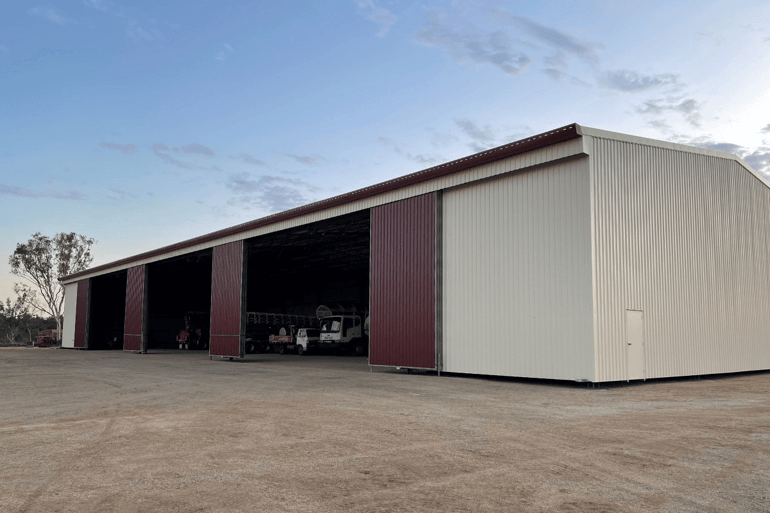
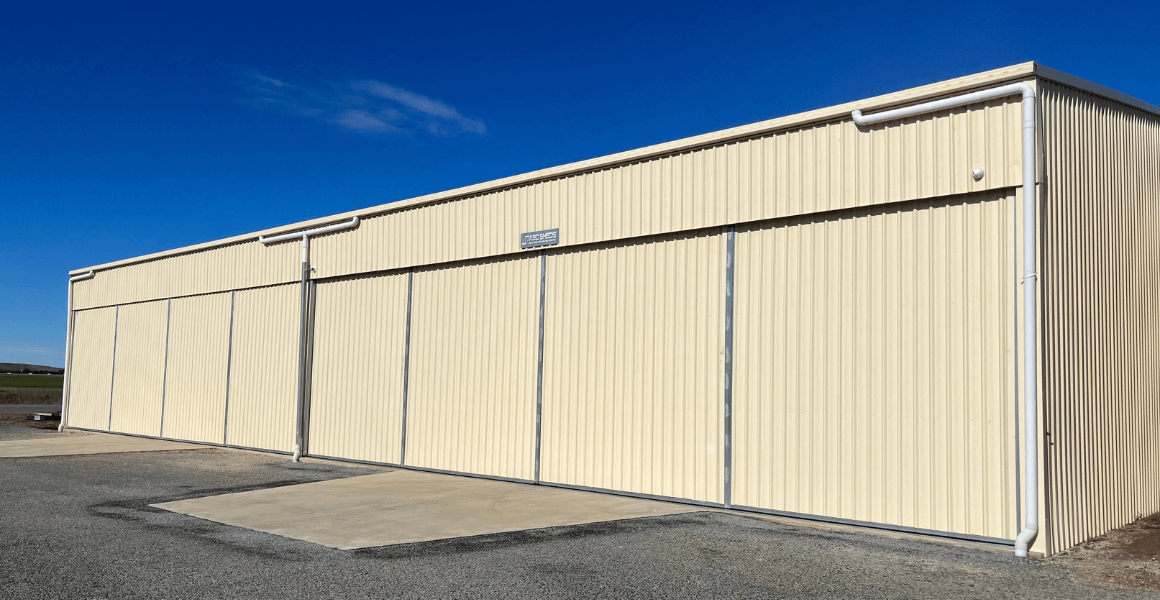
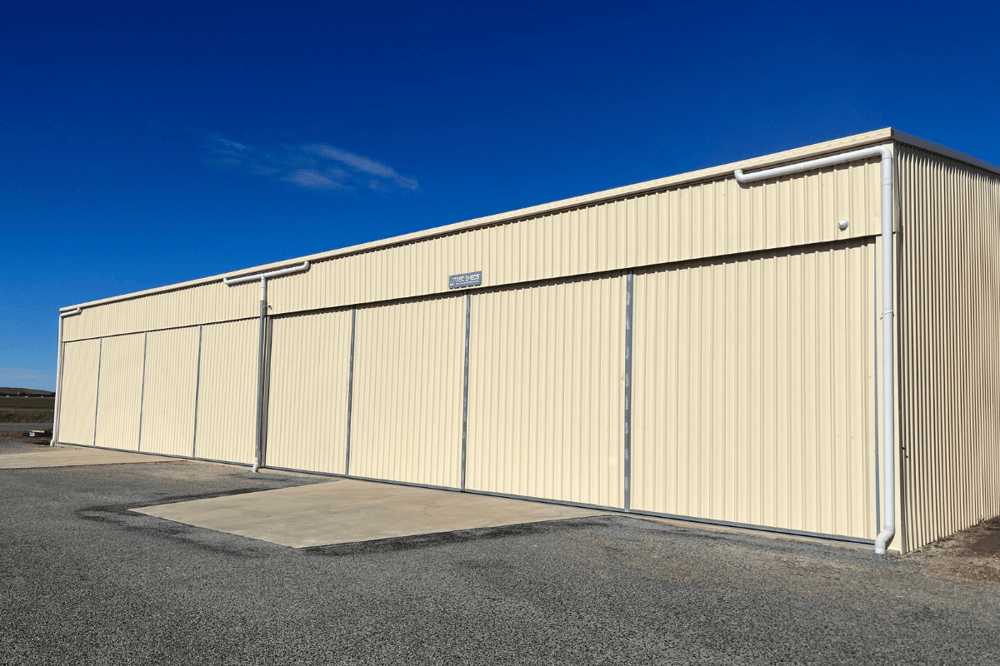
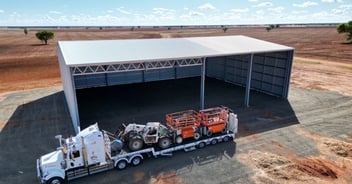
Choose sliding doors when your shed needs wide access, low maintenance, and easy repairs. They are usually the better option for farm machinery sheds, rural sheds, and buildings where large vehicles or equipment need to move in and out.
Sliding doors work well because they can provide a large opening span. They can also open as wide as the shed when outriggers are used, which makes them practical for machinery access.
They are also a simpler door system. If a sliding door is damaged by machinery or equipment, it is generally cheaper to repair than a roller door.
Sliding doors are the better choice when:
- You need a wide opening for machinery
- You want a low-maintenance door
- You want cheaper repairs if the door is damaged
- You want a door that can be installed after the shed is built
- You do not need full sealing or remote operation
When should you choose roller doors?
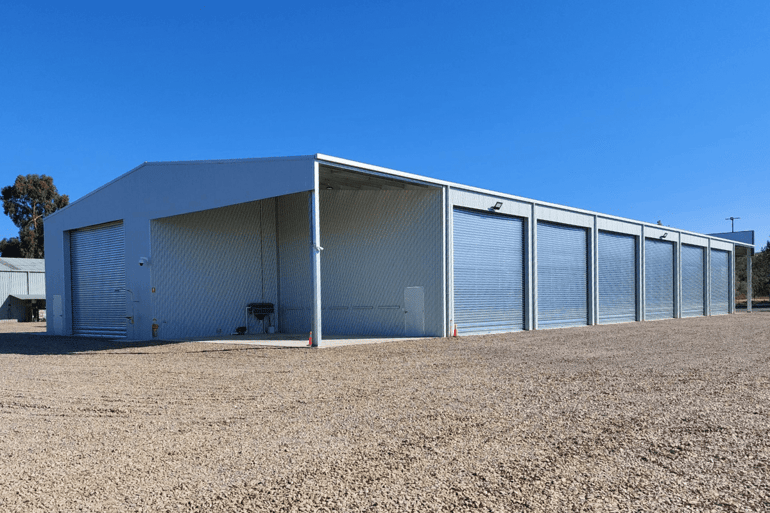
Choose roller doors when your shed needs stronger security, better sealing, and easier controlled access. They are usually the better option for commercial sheds, industrial buildings, warehouses, and factories.
Roller doors open vertically, which means they do not need horizontal space beside the opening. This makes them useful where the space around the door needs to stay clear for vehicles, equipment, or storage.
They can also be fitted with remotes, making them easier to open from outside the building. This is useful for commercial and industrial sites where staff, vehicles, or deliveries may need regular access.
Roller doors are the better choice when:
- You need a secure door
- You need better weather or dust sealing
- You want remote access
- You do not have room for a sliding door to move sideways
- You are building a warehouse, factory, or industrial shed
What are sliding doors best for?
Sliding doors are best for sheds that need wide access and simple day-to-day use. They are especially suited to farm machinery sheds where the door opening needs to accommodate larger vehicles.
A sliding door is usually fixed to a rail or track and moves sideways along the shed. On larger sheds, multiple sliding doors can be used to create a wider opening.
The main advantage is access. If the biggest challenge is getting machinery, vehicles, or large items in and out of the shed, sliding doors are usually the more practical option.
Advantages of sliding doors
Sliding doors are practical, simple, and cost-effective for many rural and machinery-based sheds.
Key advantages include:
- Low maintenance
- Cheaper to repair if damaged
- Easy to install after the shed is built
- Large opening span
- Ability to open as wide as the shed using outriggers
Disadvantages of sliding doors
Sliding doors are not the best option when sealing, security, or remote access are the main priorities.
The main disadvantages are:
- They do not seal as well as roller doors
- They are not easily motorised
- They need space beside the shed or bay to slide into
What are roller doors best for?
Roller doors are best for sheds that need stronger security, better sealing, and convenient access. They are especially suited to commercial and industrial buildings where equipment, stock, or valuable materials are stored inside.
A roller door is made from connected slats that roll upward above the opening. Because it opens vertically, it does not need side clearance.
The main advantage is protection. If the shed needs to be secure, sealable, and easy to access with a remote, a roller door is usually the better choice.
Advantages of roller doors
Roller doors are a strong option when the shed needs to protect what is stored inside.
Key advantages include:
- Highly secure
- Excellent weather sealing
- Can open from outside the building with remotes if fitted
- Does not need horizontal clearance beside the opening
Disadvantages of roller doors
Roller doors are more complex than sliding doors and can be more expensive to install and repair.
The main disadvantages are:
- Professional installation is generally recommended
- More moving parts mean more components that may require maintenance over time
- Repairs can be expensive
- Extra height clearance is required
- The door will not open to full bay width
- Maximum door size is restricted
- It cannot provide a 16m opening like sliding doors can
How much do roller doors and sliding doors cost?
Sliding doors usually cost around $3,000 to $20,000, depending on the door span and whether a double or triple track is needed. Roller doors usually cost around $3,000 to $50,000 depending on the size, width, and engineering requirements.
A sliding door is usually the more cost-effective option when a wide opening is needed. The final price changes depending on how many bays the door needs to cover and the track setup required.
A roller door can become more expensive as the opening gets wider. Wider roller doors need more engineering and material support. They also require extra height clearance, which can affect the overall shed design and cost.
How do you choose the right shed door?
Choose the right shed door by matching the door to the job the shed needs to do. If the shed needs wide access for machinery, choose sliding doors. If the shed needs security, sealing, and remote access, choose roller doors.
The easiest way to decide is to look at access, clearance, security, weather protection, maintenance, and cost.
If you need the widest opening, choose sliding doors
Sliding doors are the better choice when the opening needs to be as wide as possible. This is why they are commonly used on machinery sheds and rural sheds.
They can provide a larger opening span than roller doors and can open as wide as the shed using outriggers.
If you need the strongest seal, choose roller doors
Roller doors are the better choice when the shed needs to seal more effectively. This is useful for buildings that need better protection from dust, weather, or unauthorised access.
Sliding doors are practical, but they do not seal as well as roller doors.
If you want lower maintenance, choose sliding doors
Sliding doors are the better choice when simplicity and lower maintenance are important. They have fewer moving parts and are generally cheaper to repair if damaged.
This makes them useful for farm environments where machinery, vehicles, and equipment are moving around the shed regularly.
If you want remote access, choose roller doors
Roller doors are the better choice when remote operation is important. If fitted, they can be opened from outside the building using remotes.
This is useful for commercial and industrial sheds where access needs to be quick and convenient.
If space beside the opening is limited, choose roller doors
Roller doors are the better choice when there is no room for a door to slide sideways. Because they roll upward, the wall space beside the opening can be used for other purposes.
Sliding doors need space to move into, which may affect how the shed or surrounding area can be used.
Practical shed door examples
Different sheds need different door setups. These examples show where roller doors and sliding doors are usually the better fit.
Farm machinery sheds
Sliding doors are usually the better choice for farm machinery sheds. They provide wider access, are easier to repair, and suit large vehicles and equipment.
Commercial sheds
Roller doors are usually the better choice for commercial sheds. They provide better security and sealing, which is important when equipment, stock, or materials are stored inside.
Industrial buildings
Roller doors are usually the better choice for industrial buildings because they offer secure, controlled access. They also work well where remote access and space efficiency matter.
Warehouses and factories
Roller doors are usually the better choice for warehouses and factories. They open vertically, which helps keep surrounding space available for vehicles, loading areas, equipment, and storage.
Hay sheds and grain sheds
Sliding doors are often a practical choice for hay sheds and grain sheds when wide access is the main priority. Roller doors may be more suitable when better sealing or security is required.
Custom sheds
For custom-designed sheds, the right door should be planned around the building’s purpose. Sliding doors are stronger for wide access. Roller doors are stronger for security, sealing, and remote access.
Plan the right door with your shed design
The best shed door is the one that suits how the shed will actually be used. Sliding doors are usually the stronger option for wide machinery access and low maintenance. Roller doors are usually the stronger option for security, sealing, and commercial access.
Standwell can help you choose the right door type for your shed, whether you are planning a yard cover, horse arena, hay shed, machinery shed, industrial shed, aircraft hangar, workshop, grain shed, farm machinery shed, or custom-designed shed.
You can explore the full range of Standwell structures, use the virtual shed builder, or contact the team for advice on the right shed door for your project.

.jpeg?width=352&name=2093%20(2).jpeg)
.svg)