


-1.svg)
.jpg)
When farmers start planning a grain storage setup, the first question is almost always about cost. A grain shed is a significant investment, and getting a realistic figure early makes the whole planning process a lot smoother.
Costs shift depending on size, materials, site conditions, and a few other factors that aren't always obvious upfront, so this article breaks down what you can expect to pay and what drives those figures.

Grain Shed Costs in Australia (TL;DR)
- Typical project range: Most grain shed builds land between $250,000 and $500,000+, depending on size, specifications and site conditions.
- Square metre rates: Standwell grain storage sheds start from around $350/m² for fully enclosed structures with steel wall cladding, and from $550/m² for concrete panel walls.
- Main cost drivers: Size, span, cladding type, site preparation, concrete flooring, engineering, wind rating, doors, access points and internal layout all influence the final price.
- Quote inclusions: Our quotes include engineering, materials, delivery and construction upfront, so costs are clearer before the project starts.
- Sizing support: Standwell’s commodity storage calculator can help estimate how much space you need before requesting a tailored quote.
Grain shed costs in Australia
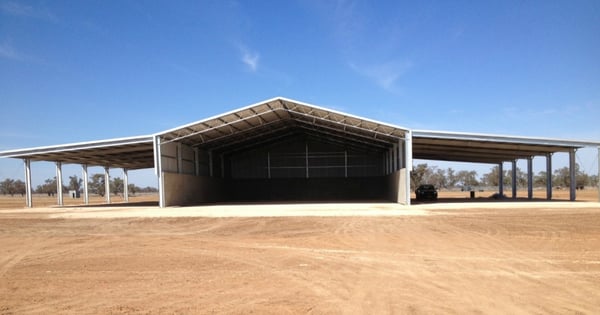
At Standwell, grain storage sheds start from around $350 per square metre for fully enclosed structures with steel wall cladding, and from $550 per square metre for concrete panel walls. When you translate that into total project costs, most grain shed builds land somewhere between $250,000 and $500,000+, depending on size, specifications, and site conditions.
That's a wide range, and several factors determine where your build lands within it.
The main factors affecting grain shed prices
|
Cost factor |
How it affects price |
What to consider |
|
Size and span |
Larger sheds cost more overall, but the cost per tonne of grain stored can improve as the shed scales up. Wider spans can also require heavier structural steel. |
If budget is tight, a longer shed with a narrower span may store the same amount of grain more economically than going very wide. |
|
Cladding type |
Steel wall cladding starts from around $350 per square metre for fully enclosed structures. Concrete panel walls start from around $550 per square metre. |
Concrete panels can suit larger operations and commodity sheds handling heavier grains because they offer greater load-bearing strength and better dust control. |
|
Site preparation and concrete flooring |
Earthworks, levelling, compaction and concrete flooring are separate costs from the shed itself and can vary significantly by site. |
A concrete floor is strongly recommended for grain storage because it helps control moisture, keeps grain off the ground and makes cleaning more practical. |
|
Engineering and wind rating |
Every Standwell shed is independently engineered for its location. Higher wind regions may require structural changes that add to the cost. |
Engineering should not be treated as an optional budget item. It is what helps the shed meet Australian building standards and perform in local conditions. |
|
Doors, access points and layout |
Large doorways, bay numbers and whether walls are open or fully enclosed all affect the final price. |
Plan around how augers, semi tipper and front-end loaders will move through the shed. |
|
Quote inclusions |
Some quotes may exclude site-specific engineering, delivery or installation, which can make the headline price look lower than the real project cost. |
Compare quotes like-for-like and confirm exactly what is included before signing. |
1. Size and span
Bigger sheds cost more in absolute terms, though the cost per tonne of grain stored often improves as you scale up. Wider spans also add cost because they require heavier structural steel to bridge the distance without internal posts. If budget is tight, a longer shed with a narrower span can store just as much grain more economically than going very wide.
2. Cladding type: steel vs concrete panels
Standard steel cladding is the more affordable option and works well for most grain storage applications. Concrete panel walls offer greater load-bearing strength, better dust control, and more resistance to grain pressure against the walls, which is why they're common in large-scale operations and commodity sheds handling heavier grains. The trade-off is cost: concrete panels can push your per-square-metre rate up significantly.
3. Site preparation and concrete flooring
Before a single column goes in the ground, your site needs to be properly prepared. Earthworks, levelling, and compaction are all separate costs from the shed itself, and they vary enormously depending on how flat and stable your land already is. A concrete floor, while not always mandatory, is strongly recommended for grain storage as it creates a sealed surface that controls moisture, keeps grain off the ground, and makes cleaning between seasons far more practical. Budget this separately.
4. Engineering and wind rating
Every Standwell shed is independently engineered to meet Australian building standards for your specific location. If your property sits in a higher wind region, for example, there could be changes in your structure that may add to the cost. This isn't optional and it shouldn't be viewed as a budget line to trim: the engineering is what keeps your shed standing when the weather turns.
5. Doors, access points, and internal layout
Wide doorways for augers, semi tipper, and front-end loaders are a standard part of any functional grain shed, but the size and type of door (sliding, roller, or open bay) affects the price. The same goes for the number of bays and whether any walls remain open or are fully enclosed.
What's included in a Standwell quote?
One of the more frustrating things about shopping for a grain storage shed is that quotes from different suppliers often aren't comparing apples with apples. A low headline price can mask additional costs that only show up once you're committed.
At Standwell, quotes are all-inclusive: engineering, materials, delivery, and construction are calculated upfront, with no surprises after you've signed. All sheds exceed Australian building standards and are backed by a 25-year "You're Covered" guarantee on the structural frame. When comparing quotes, ask whether site-specific engineering, delivery, and installation are included. The answer will tell you a lot.
Ready to get started? Use Standwell's free commodity storage calculator to figure out how much space you need, then get in touch with the team for a detailed quote tailored to your property and crop.
Frequently Asked Questions
.png?width=352&name=ABC%20Sheds%20%20Blog%202%20(1).png)
.svg)