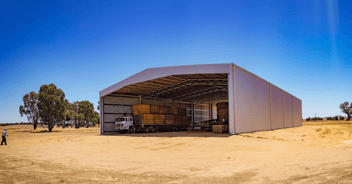
Large shed roofs can offer valuable space for solar panels, helping Australian farms and businesses generate electricity for their day-to-day operations.
More than 4.5 million Australian homes and small businesses now have rooftop solar, and installations in the first half of 2026 were the strongest six-month period since 2021.
But getting the most from a solar installation involves more than choosing the right panels. A shed’s roof orientation, pitch, shading and structural capacity all influence how well a system performs.
If you're planning a new shed, considering these factors early can help ensure the building is designed to accommodate your solar requirements, whether you intend to install panels straight away or in the future.
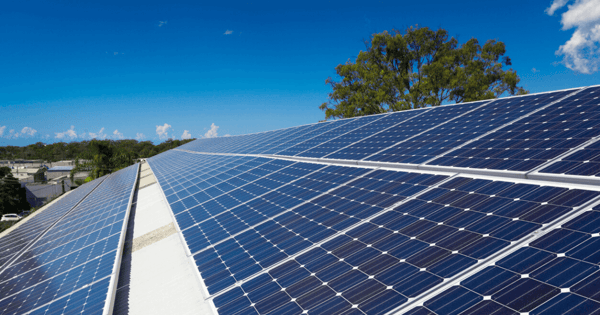
Key considerations for solar panels on a shed
- You can put solar panels on a shed. Large, open shed roofs suit solar very well.
- The benefits include lower power bills, minimal maintenance, fewer emissions and added property value.
- Federal incentives can cut the upfront cost of panels and batteries for homes and small businesses.
- Before installing, check roof pitch, orientation, shading and whether the structure can carry the weight.
- Planning for solar at the design stage is the simplest and most cost-effective approach.
What are the benefits of solar energy on a shed?
Solar on a shed cuts running costs, needs very little upkeep, lowers emissions and can add value to your property.
Most shed roofs do nothing but keep the rain off, so putting that space to work makes a lot of sense. The main benefits are:
- Lower power bills. Every kilowatt you generate is one you don’t buy from the grid, and those savings add up over the 25-odd-year life of a system.
- Very little maintenance. Modern panels are built to handle dust, rain and heat. An occasional clean helps in dusty areas, but otherwise they largely look after themselves.
- A smaller environmental footprint. Panels produce no emissions while generating power, which reduces your reliance on fossil fuels.
- Added property value. Buyers increasingly look for lower running costs and sustainable features, so a solar-equipped shed can make a property more appealing when it’s time to sell.
On a farm or commercial site, that power can run water pumps, cool rooms, workshop tools, lighting and electric fencing. Systems are also much bigger than they used to be, with the national average now sitting at roughly 10 kW, about double what was typical around 2020.
Thinking about building with solar in mind from the start? Use our online shed builder tool to map out a shed that suits your site and your roof.

Are there rebates for solar panels and batteries?
Yes. Eligible solar systems and batteries for homes and small businesses can attract federal incentives that reduce the upfront cost.
Solar systems up to 100 kW can create small-scale technology certificates (STCs) under the Small-scale Renewable Energy Scheme. Most installers apply these as a discount on your quote, so you’ll usually see the saving straight away.
Batteries are now covered too. Since 1 July 2025, households and small businesses have been able to get around 30% off the upfront cost of an eligible battery through the Cheaper Home Batteries Program. From 1 May 2026, the program introduced tiered support, with lower discount rates applying to battery capacity above 14 kWh. The support rate is also scheduled to decrease every six months from 2027 until the program ends in 2030.
State schemes may add to this, and rebate amounts change often. Get quotes from an accredited installer and ask exactly which incentives have been applied.
What should you check before putting solar panels on a shed?
Roof pitch, orientation, shading and structural load all determine how well your shed performs with solar.
- Roof pitch. The angle should suit your location so the panels catch as much sun as possible. A single-pitch or skillion roof is popular because it gives you one large, uninterrupted surface facing the right way.
- Orientation. North-facing panels generate the most power across the day in Australia. West-facing panels produce more in the afternoon, which can suit operations that run late or want to cover the evening peak.
- Shading. Even a well-placed roof underperforms if trees, silos or nearby buildings cast shade across it. Our guide to shed orientation covers this in more detail.
- Weight. Panels, rails and mounting hardware all add load, so the frame needs to be engineered to carry it. This matters most on wider sheds with larger arrays.
All four are easiest to sort out at the design stage. Retrofitting can work, but it narrows your options.
Can you add solar panels to an existing shed?
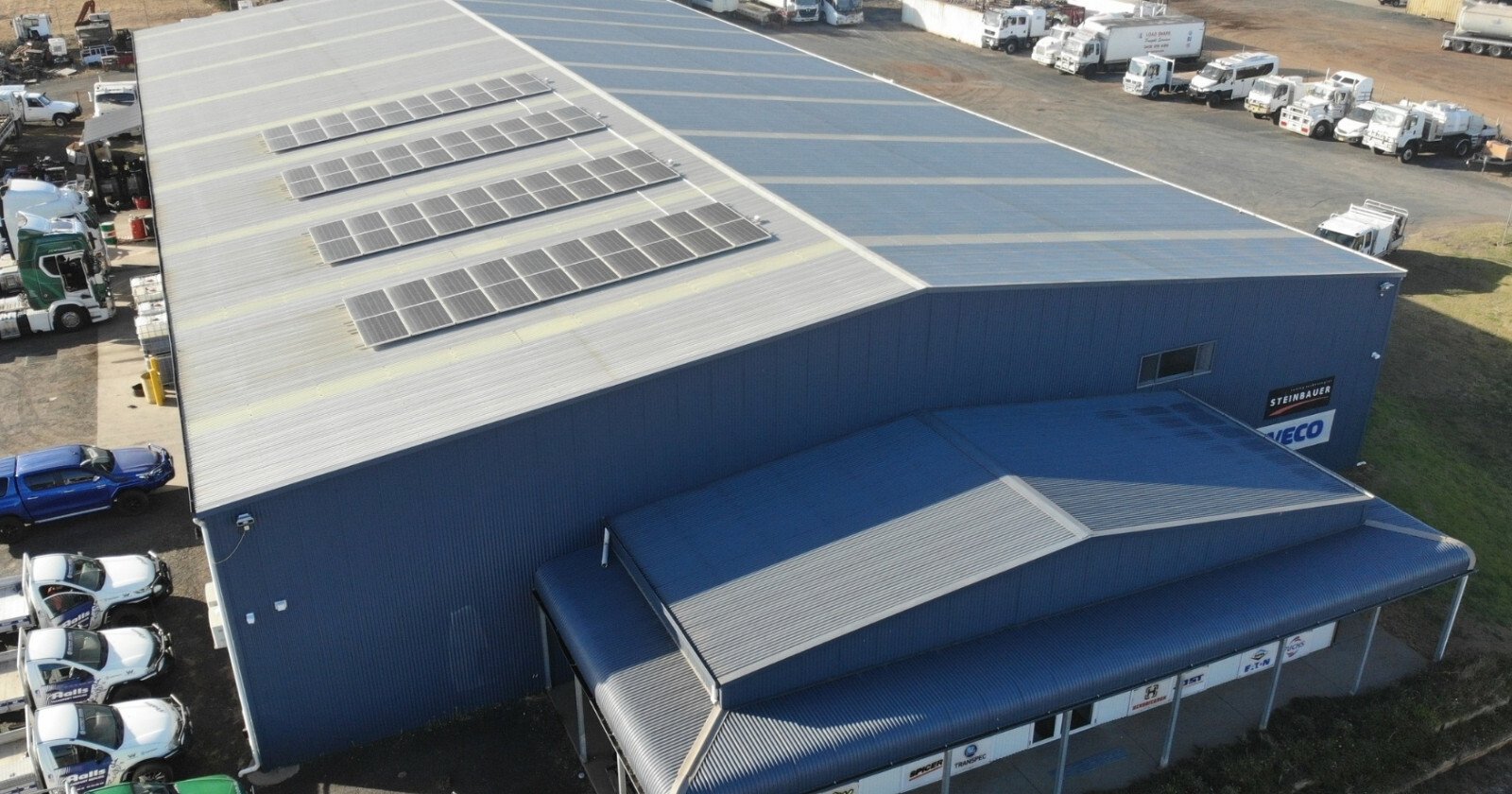
Often, yes, as long as the frame and roof are strong enough to carry the extra weight.
Lightweight purlin sheds may need extra engineering or reinforcement before panels can go on, which adds cost and time. Sheds built from structural steel generally have strength to spare.
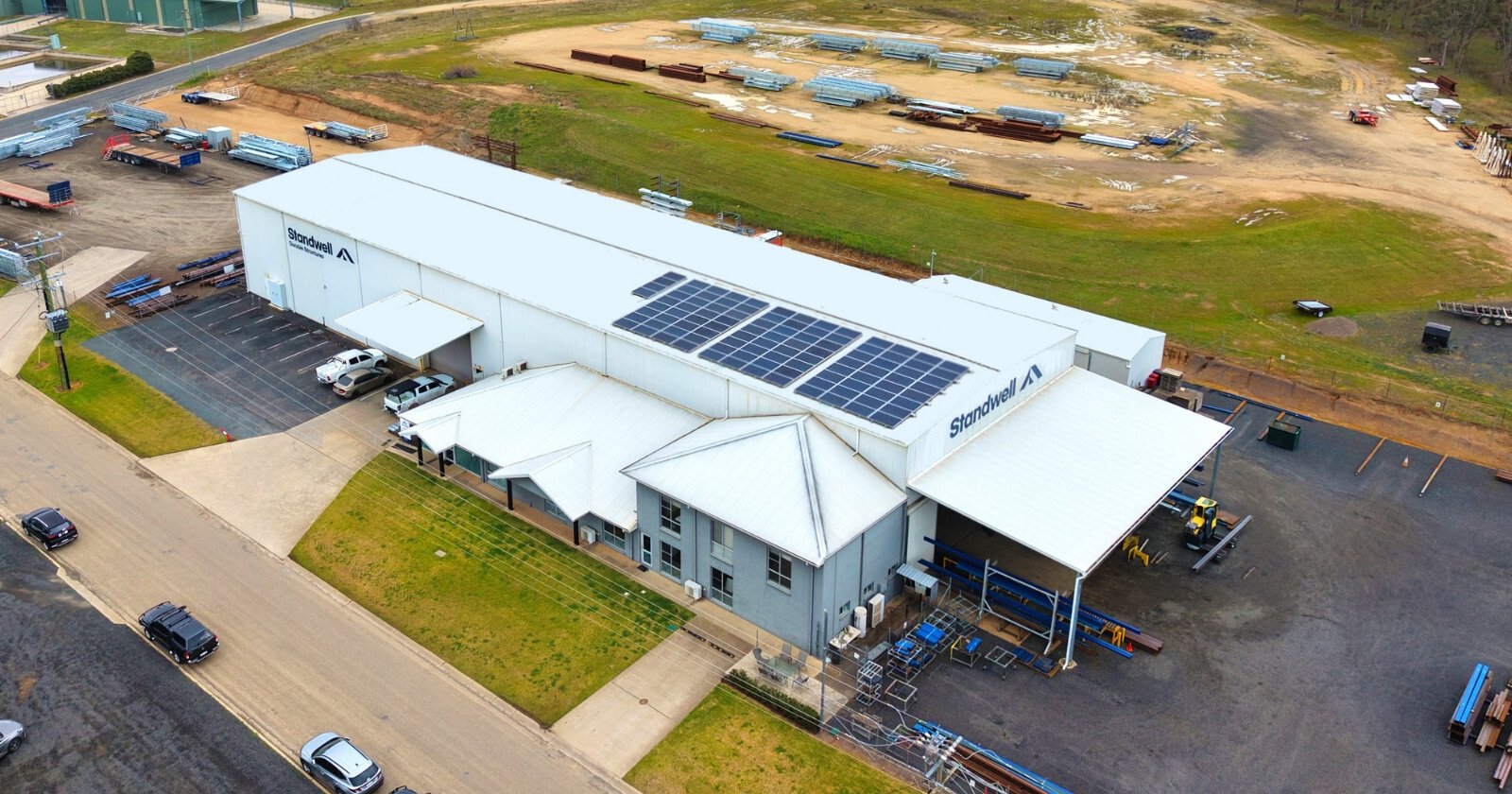
Every Standwell shed is built from structural steel, so it’s strong enough to hold solar panels without additional engineering. That makes adding a system easy, whether you install it straight away or a few years down the track.
If you have an existing shed, we can assess it to see whether it’s suitable for solar and what, if anything, it needs first.
Is solar worth it for your shed?
For most farms and businesses, yes. With power costs still biting and incentives on offer, a shed roof is one of the best places to generate your own energy. The trick is getting the structure, pitch and orientation right before the panels go up.
That’s where we can help. We design and build structural steel sheds across Australia that are ready for solar from day one, and we’re happy to check whether an existing shed is up to the job.
Whether you’re planning a new build or weighing up a retrofit, our team can talk you through the options. Request a quote to get started.

Frequently asked questions on solar panels on sheds