


-1.svg)
.jpg)
If you’re planning a new farm shed, you’ll want to know how much it is likely to cost before deciding on its size, design, and features.
In Australia, a standard structural steel farm shed typically costs $175 to $280 per m², with total project costs ranging from around $50,000 to $270,000 including GST and construction. The final price depends on factors such as the shed’s size, location, intended use, engineering requirements, and custom features.
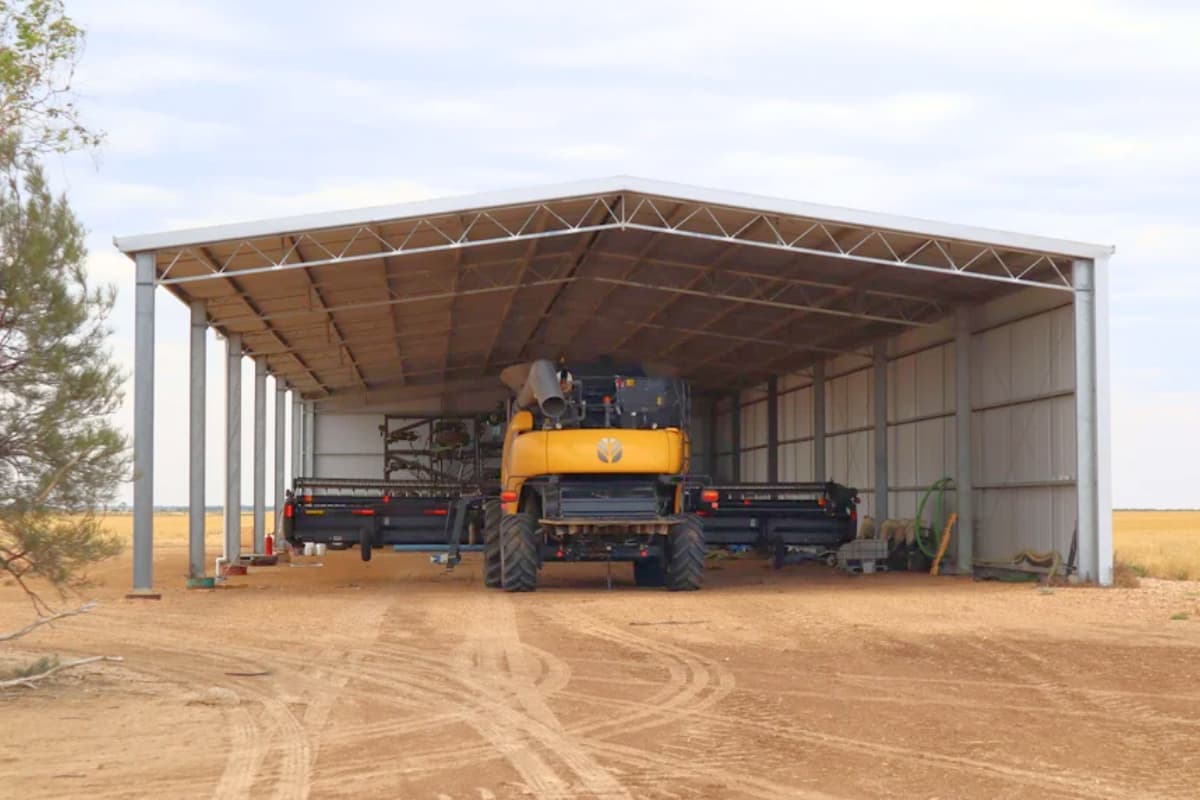
Farm shed costs at a glance
|
Cost factor |
Typical cost or consideration |
|
Structural steel shed |
$175 to $280 per m² |
|
Total project cost |
$50,000 to $270,000 including GST and construction |
|
Main cost drivers |
Size, span width, bay spacing, eave height, flooring, insulation, and custom additions |
|
Engineering |
Site-engineered by independent structural engineers |
| Steel specification |
Hot-dip galvanised structural steel |
| Quote type | Fixed-price quotes provide greater cost certainty; estimate quotes may change during construction |
These figures provide a starting point rather than a final quote. The more your shed differs from a standard design, the more its dimensions, site requirements, structural specifications, and additional features can affect the final price.
For a quick estimate based on your shed’s size and requirements, try our Shed Estimate Calculator.

How much does a farm shed cost?
A farm shed can cost anywhere from $50,000 for a smaller standard structure to more than $270,000 for a larger or more complex design, such as an expansive drive-through or enclosed shed. The $175 to $280 per m² range provides a useful starting point for estimating the structural cost, but the total project price depends on what you need the building to do.
For example, two sheds with the same floor area can have different prices if one requires a greater span width, taller eaves, additional bays, concrete flooring, insulation, or other custom additions.
When estimating your farm shed budget, consider:
- Overall dimensions: Length, span width, and eave height affect the amount of structural material required.
- Building configuration: Open-sided, enclosed, drive-through, and other configurations can have different structural and construction requirements.
- Site requirements: Your location and site-specific engineering requirements can affect the design and cost.
- Intended use: A shed for machinery storage may have different requirements from one designed for livestock, produce, or multiple uses.
- Custom additions: Features such as concrete flooring, insulation, and other additions can increase the overall project cost.
- Quote type: A fixed-price quote provides greater certainty about the final cost, while an estimate quote may be subject to price increases during construction.
All Standwell structures exceed the Australian Building Code and are site-engineered by independent structural engineers using hot-dip galvanised structural steel.
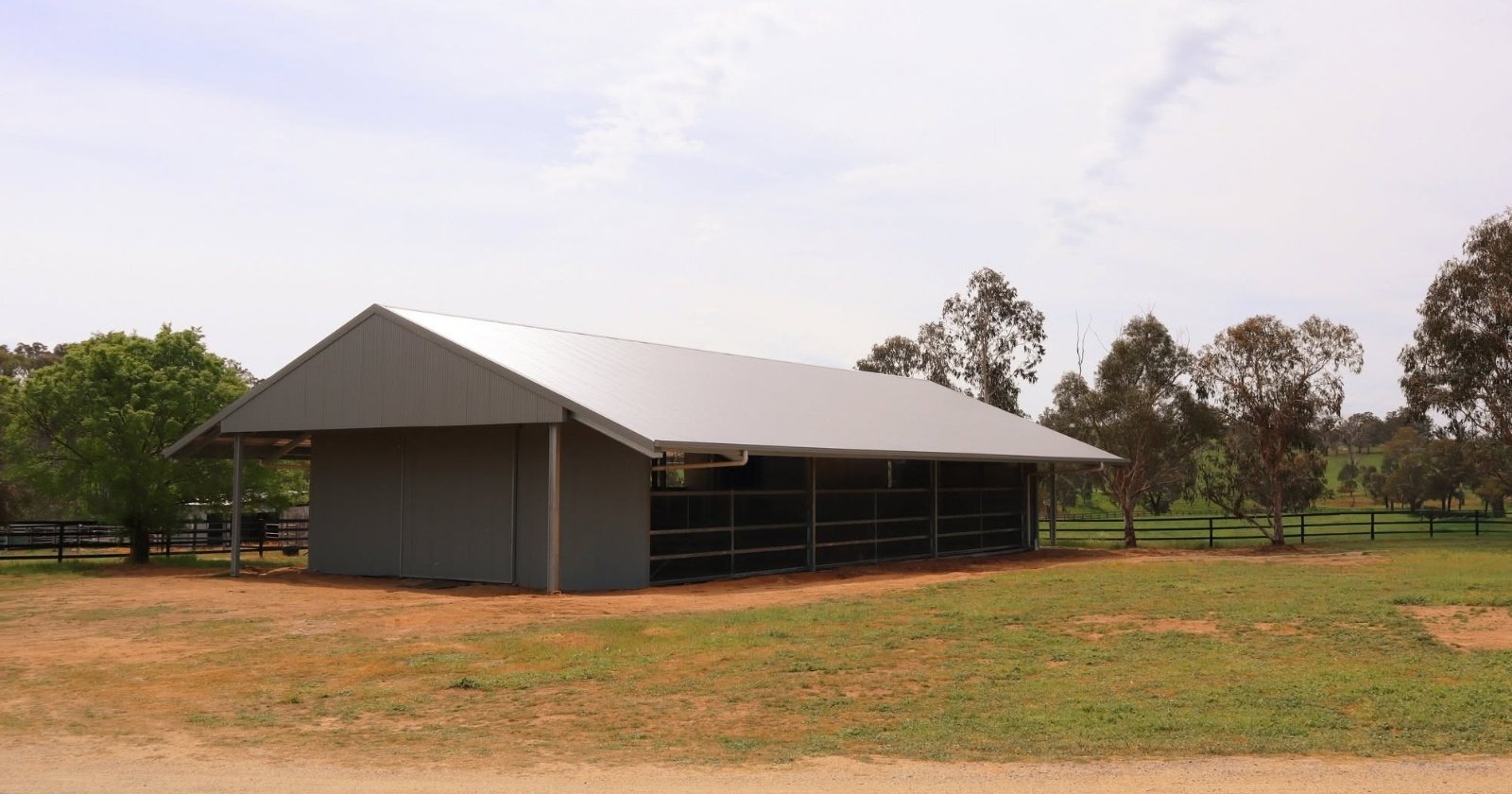
Key factors affecting farm shed pricing
Shed span and bay width
The span refers to the overall width of the building, while bay spacing is the distance between supporting structural columns. Wider spans and larger bay spacings demand stronger structural steel supports, which increases material costs.
However, extending a shed span to 15 metres or greater while increasing bay spacing from 6 metres to 8 metres can deliver a more cost-effective structural outcome per square metre. Custom structural designs can accommodate bay openings up to 16 metres wide.
Shed height
Eave height determines total internal storage capacity and clearance for large machinery or roller doors. Increasing building height often requires structural reinforcement. Sheds with an eave height over 7 metres typically demand structural modifications, raising the overall project price.
Concrete flooring
Installing concrete flooring creates a durable, hard-wearing barrier between the ground and stored products. While concrete adds to the total construction cost, it is vital for applications with strict storage conditions, such as grain and fertiliser storage.
Shed insulation and temperature control
In Australia's extreme climate, adding insulation protects stored machinery and products from overheating while improving working conditions for staff. Climate control can be further enhanced using ventilation, fully enclosed bays, and sheeting infills.
Additional features and fire safety
Customising your shed design with additional access and safety fixtures increases the final cost.
Optional additions include:
- Access doors: Roller doors, sliding doors, and open-gable ends.
- External features: Awnings, guttering, and sheeting infills.
- Utilities & fixtures: Shed lighting and security fixtures.
- Fire protection: Firewalls, sprinklers, and dedicated water tanks to mitigate fire risks.
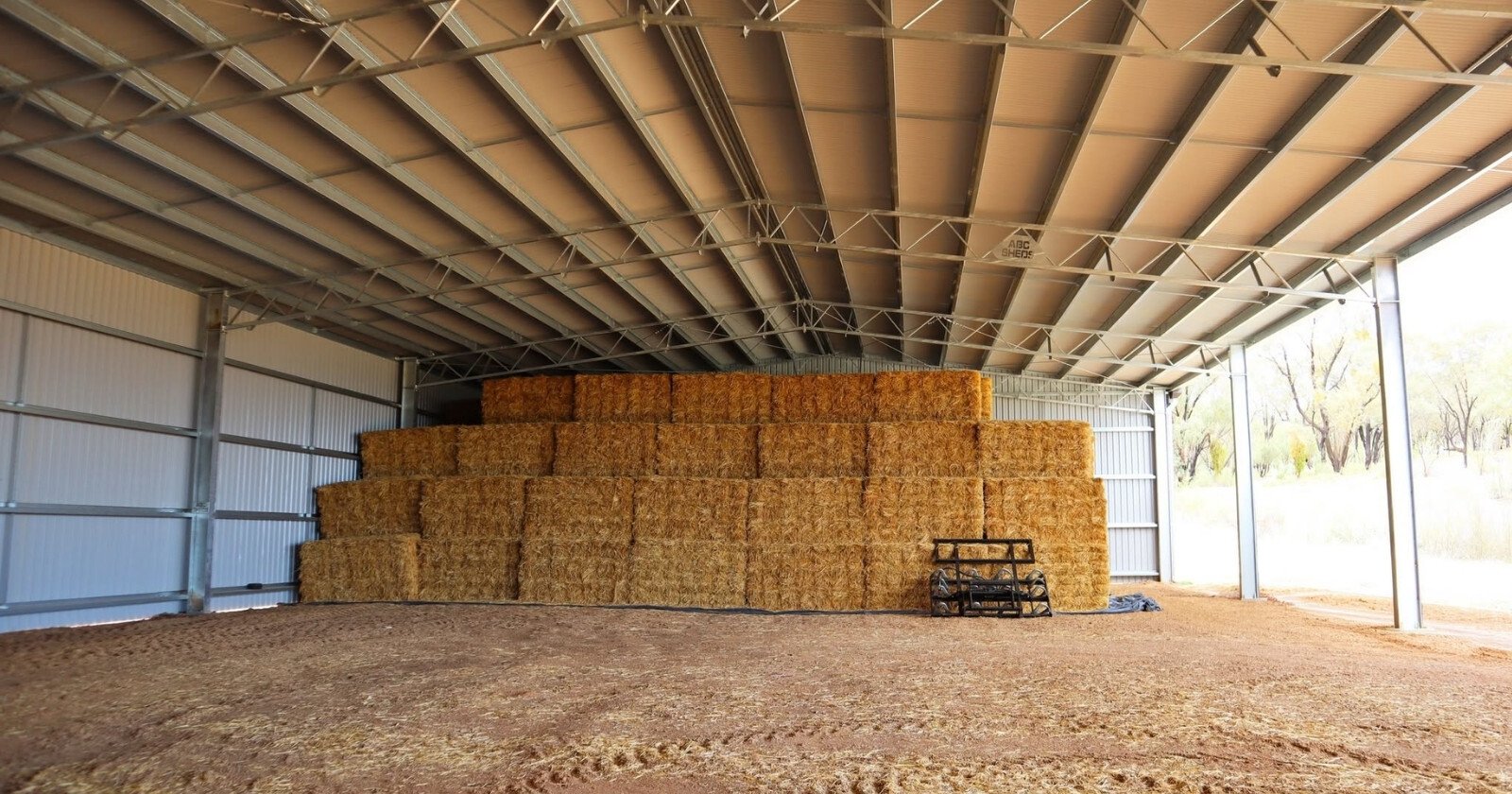
How farm shed use affects the cost
The intended application of your farm shed is an important factor in determining the overall cost. A basic machinery storage shed may only require an open structure, while applications such as grain, fertiliser or enclosed product storage may require additional flooring, insulation, ventilation, fire protection or other features.
Common farm shed applications include:
- Machinery storage and drive-through equipment sheds
- Yard covers and feedlot shelters
- Hay storage and grain storage
- Fertiliser and cotton storage
- Dressage arenas, horse stables and aircraft hangars
For applications that require a fully customised structural steel building, the final price is determined by the shed's dimensions, configuration, engineering requirements and selected features.
However, not every farm storage project requires a custom design. Standwell's Durakit kit sheds are pre-designed, making them available at fixed prices rather than requiring a customised structural quote. This can provide a more straightforward way to understand the cost of a suitable shed before purchasing.

Fixed price vs estimate quotes
Once you understand the factors that affect farm shed costs, the next consideration is how the price is presented. An estimate can help you establish an initial budget, while a fixed-price quote provides greater certainty about what you will pay for the agreed scope of work.
- Estimate quotes: Provide an indicative price based on the information available at the time. The final cost may change if the shed design, site requirements, materials or scope changes.
- Fixed-price quotes: Confirm the agreed project cost upfront, giving you greater certainty when planning your farm shed budget.
Standwell provides fixed-price quotes for custom farm buildings, so you can understand the cost of your chosen design and specifications before committing to the project.
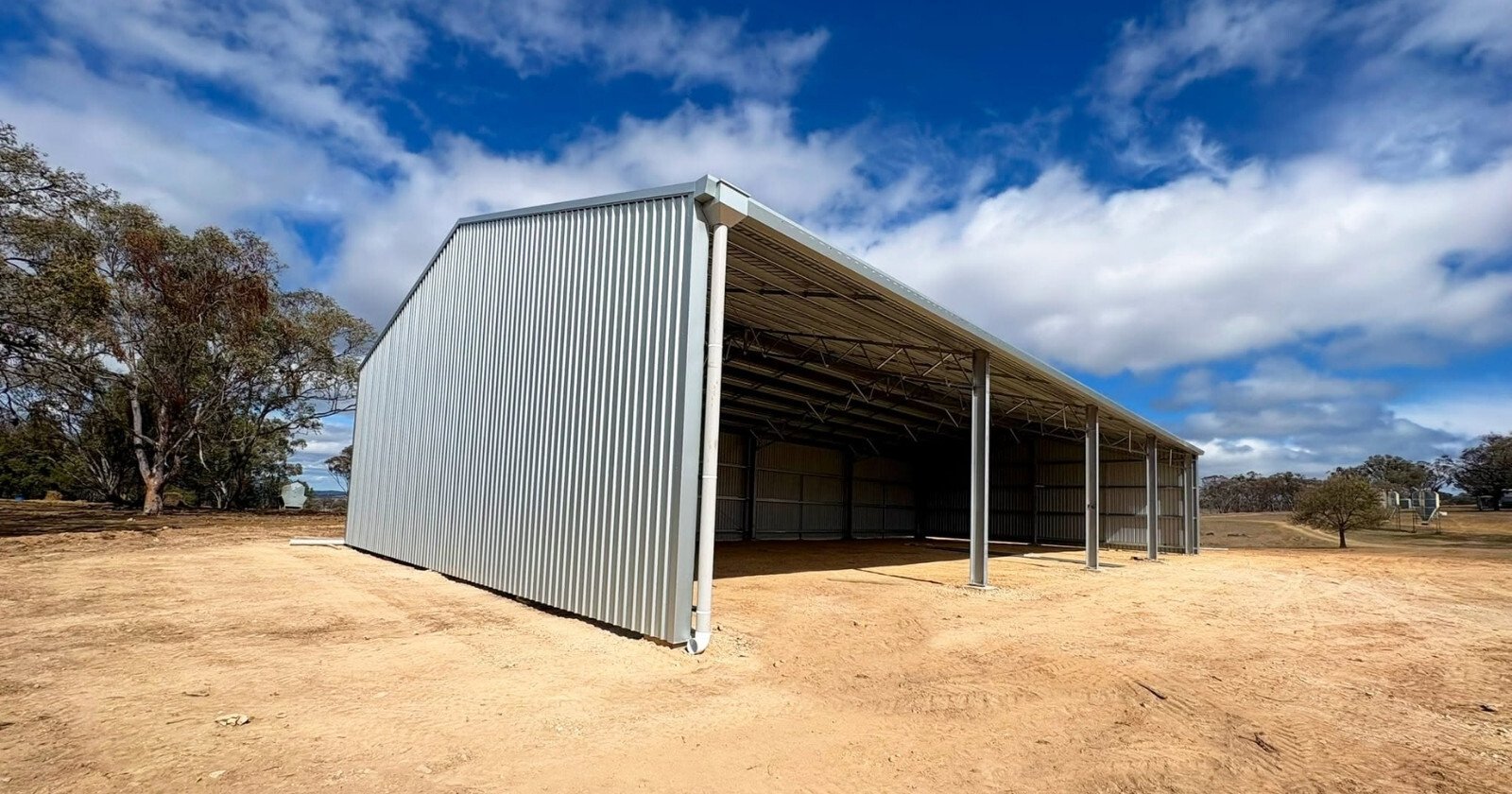
Why farm shed engineering affects the cost
Farm shed pricing isn't based on size alone. The structure must also be engineered to suit the site, local conditions and intended use of the building. Factors such as wind loading, building height, span, bay spacing and site location can all influence the structural requirements and therefore the final cost.
Standwell farm buildings are manufactured from hot-dip galvanised structural steel and independently engineered for their specific site, climate requirements and operational demands. Every structure is designed to exceed the requirements of the Australian Building Code.
This site-specific engineering is one reason a final farm shed price can differ from a simple per-square-metre estimate. It ensures the structure is designed for the conditions it will need to withstand, rather than applying a standard price to every project.
Ready to work out your farm shed cost?
The best way to move from an indicative budget to an accurate project cost is to define your shed's dimensions, application and required features. Use the Shed Estimate Calculator to get an initial indication, or request a no-obligation quote to discuss your specific requirements.

Frequently Asked Questions
.svg)