


-1.svg)
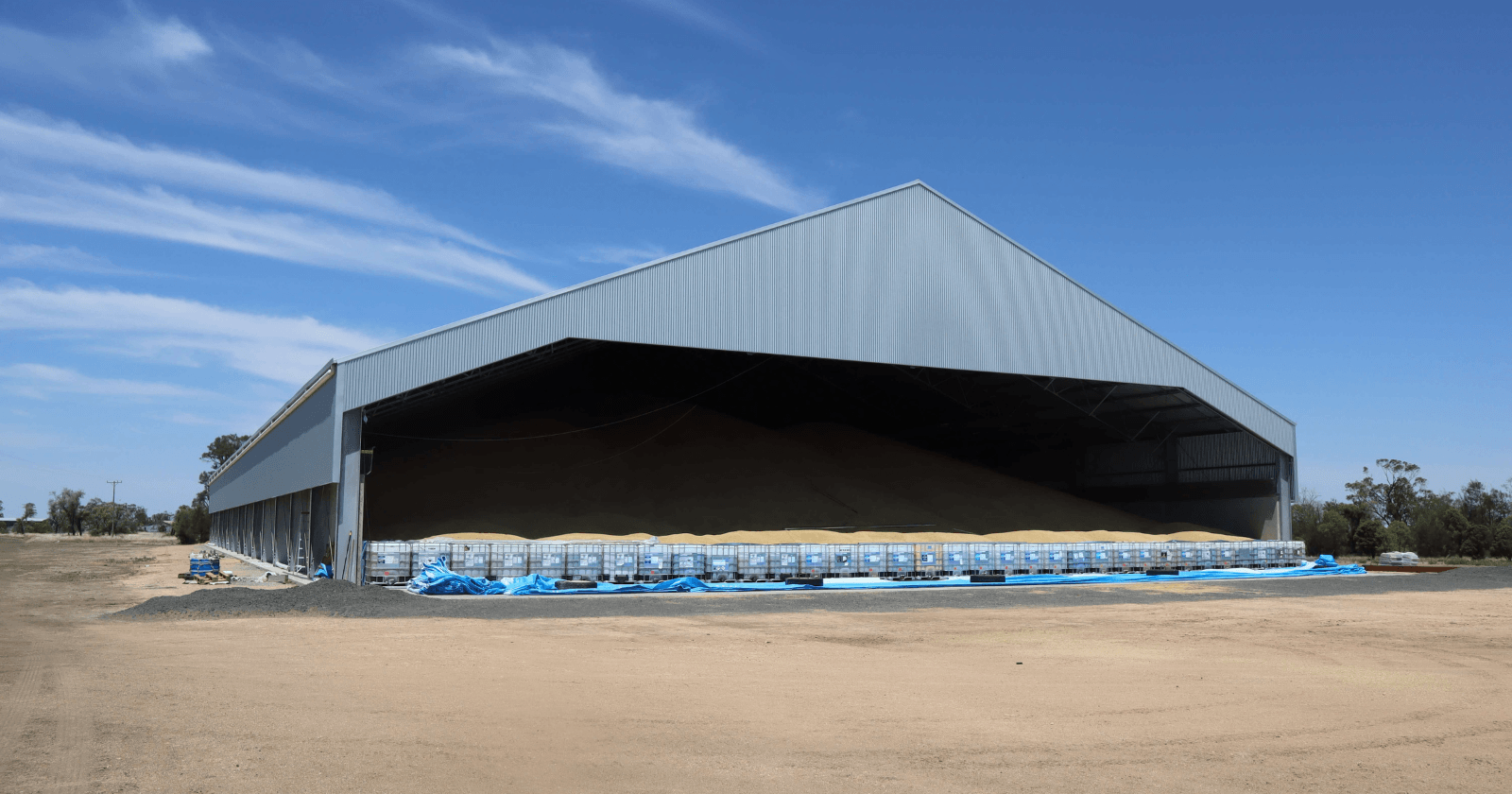
Sizing a grain shed incorrectly is an expensive mistake in either direction. A shed that can't handle a strong season leaves you scrambling for temporary storage at the worst possible time, while one that's well above your needs ties up capital you could've put to better use. Getting the size right from the start is worth the upfront thinking.
This guide covers the main factors to consider and the shed sizes that tend to work well across different scales of Australian grain farming.
Start with your tonnage
The figure that drives everything else is peak storage volume. A grain storage shed needs to handle your best season, which may look quite different from your long-run average. Sizing based on a middling year tends to leave farmers short when conditions run well.
Look back over the last few years of production. What was your biggest harvest? Where is your operation likely to be in ten years? A grain shed is a long-term investment, and building for where you're heading is always smart.
Different crops also store at different densities, which affects how much floor area and height you'll need. Wheat sits at around 780 kg per cubic metre, while sorghum and canola have different ratios again. The crop type matters just as much as total tonnage when working out the right dimensions.
Find your ideal grain shed size with our online Commodity Calculator, which helps you estimate the right size and capacity for your crop.
Understanding grain shed dimensions
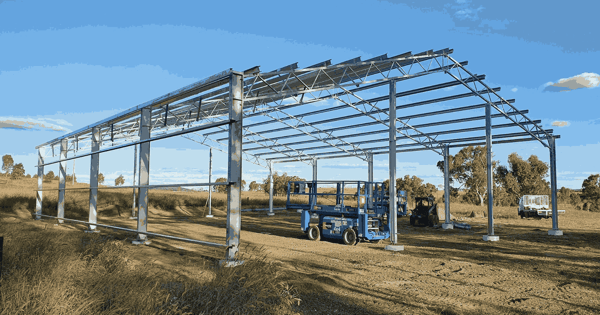
Grain sheds are described by three measurements: length × width × height. A 24m × 12m × 7m shed is 24 metres long, 12 metres wide, and 7 metres to the eaves. These measurements, combined with roof pitch and bunker configuration, determine how much grain you can actually store.
Understanding the relationship between dimensions and usable volume is where a lot of the guesswork comes in, and where getting professional input early pays off.
Common grain shed sizes and what they suit
There's no fixed standard for grain shed sizing, but certain configurations appear frequently across Australian grain farms because they match common operational scales well.
Smaller operations (up to 500 tonnes)
A grain shed in the 24m × 12m × 5m to 24m × 18m × 6m range suits smaller cropping enterprises or properties looking to establish on-farm grain storage without a large upfront cost. These sizes are also a popular starting point for farmers who plan to expand over time.
For reference: for 500 tonnes of wheat, our commodity calculator suggests a 24m × 12m shed, which provides around 600 tonnes of capacity. That buffer matters when you hit a good run of seasons.
Mid-range operations (500 to 1,500 tonnes)
Sheds in the 30m × 18m to 42m × 18m range tend to work well for medium-scale cropping operations. A 30m × 18m × 7m or 42m × 18m × 6m grain storage shed offers solid capacity while keeping day-to-day operations manageable.
At 18 metres wide, there's also enough room to work equipment inside or alongside the shed without things getting tight.
Larger operations (1,500+ tonnes)
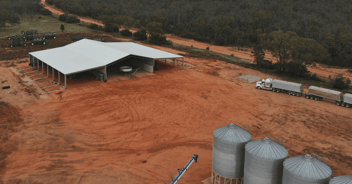
For bigger cropping enterprises, sheds in the 48m × 24m, 64m × 30m, or 84m × 36m range come into play. An 84m × 36m × 6m grain shed can accommodate thousands of tonnes and provides the footprint to work with large augers, conveyors, and loader equipment without any awkward manoeuvring. For a regional example, see this grain shed project in Moree.
These are substantial structures, engineered accordingly. Standwell has delivered grain sheds in this range across regional NSW, with every build designed in-house and constructed to meet Australian standards.
Other factors that affect sizing
Tonnage is the starting point, but a few other considerations are worth working through before settling on a design.
1. Height and roof pitch
For grain storage, height plays a bigger role than many people expect. A taller shed with the right roof pitch allows grain to pile higher in the centre, increasing effective capacity without adding to the footprint. Discussing pitch and eave height with your designer early can make a real difference to how much you can store.
2. Equipment clearance
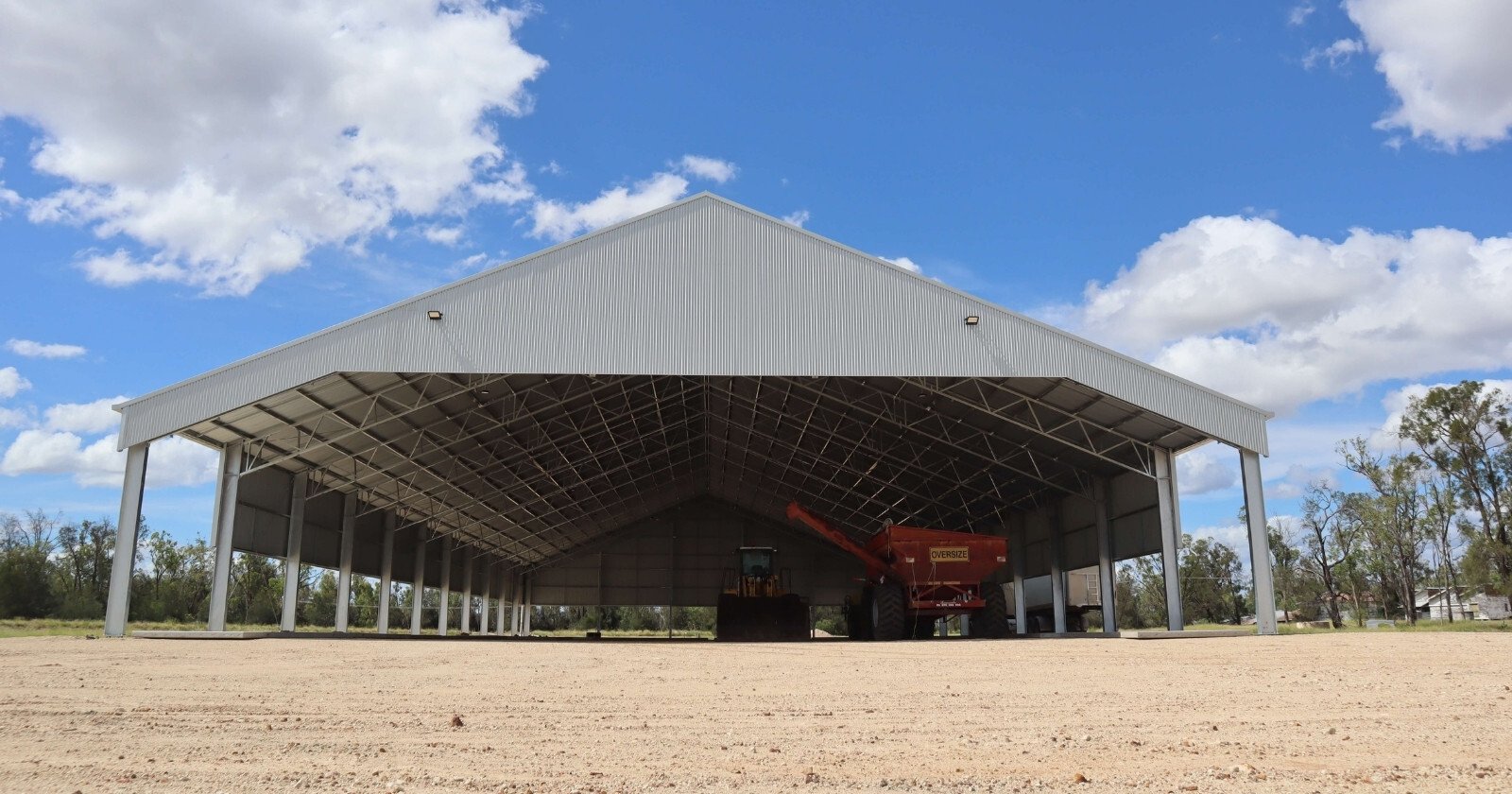
If you're running a header chaser, grain cart, or front-end loader in and around the shed, make sure the door height and internal clearance suits your machinery. It's an easy thing to overlook and a frustrating one to get wrong after the fact.
3. Dual-purpose use
Many grain sheds on Australian farms double as machinery sheds in the off-season. Sizing up slightly and adding extra height can make a shed far more versatile without a dramatic increase in build cost.
4. Bunker configuration
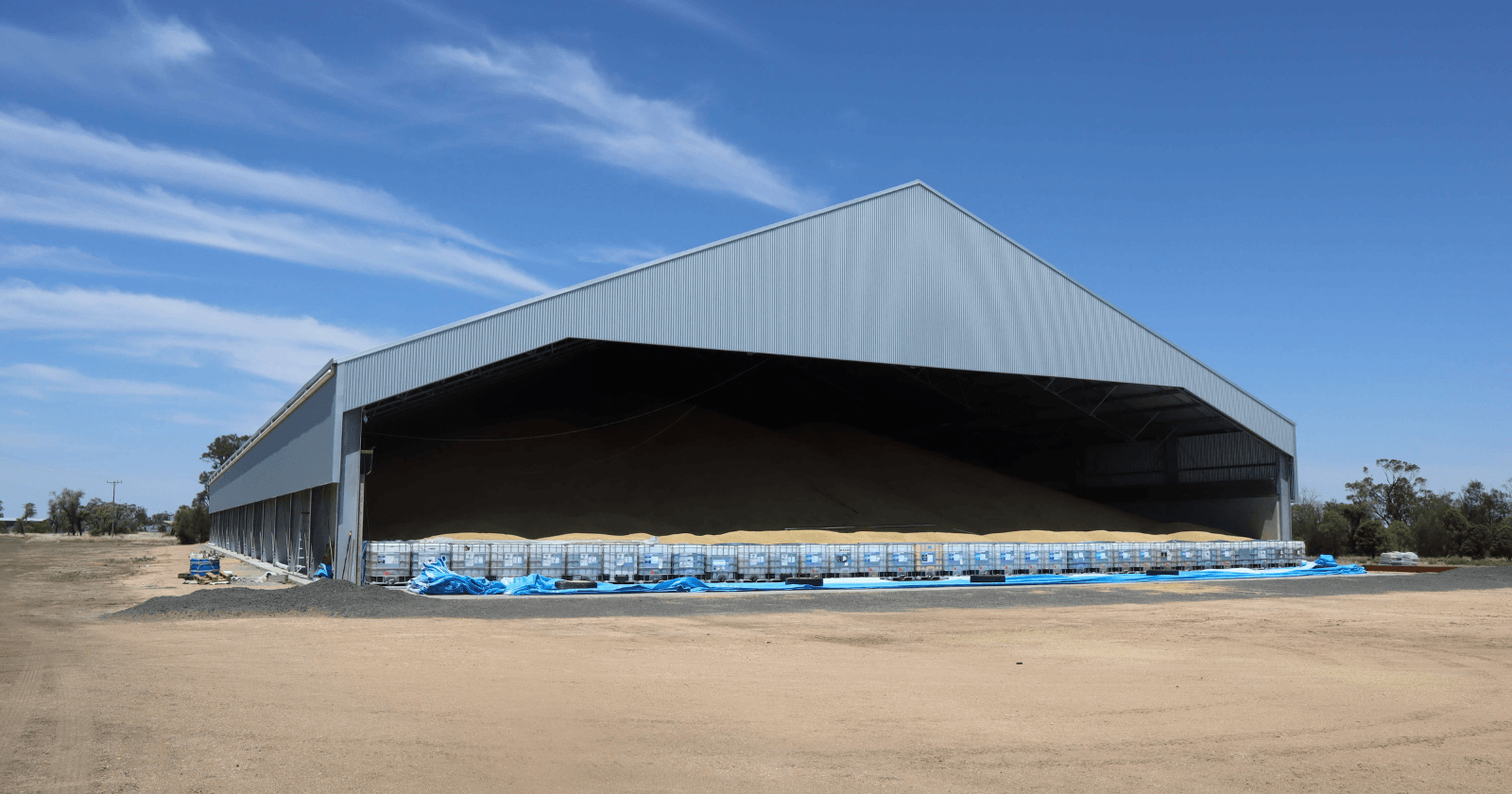
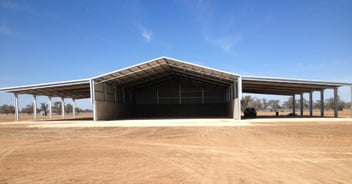
Standwell grain sheds are commonly configured as a three-sided bunker with one gable open. This is the standard setup used when calculating storage tonnage. If you're planning a different layout, your capacity estimates need to reflect that.
Finding the right grain shed
There are too many variables at play for a one-size-fits-all recommendation: your crop type, total tonnage, equipment, property layout, and future plans all feed into what will actually work on your property. But we’ve built a tool that can give you a good starting point.
Our free Commodity Calculator recommends grain shed sizes based on what you're storing and how much of it. Use it to find the right fit for your operation.
.png?width=352&name=2607%20Blog%20MS%20%231%20%20(1).png)
.svg)