


-1.svg)
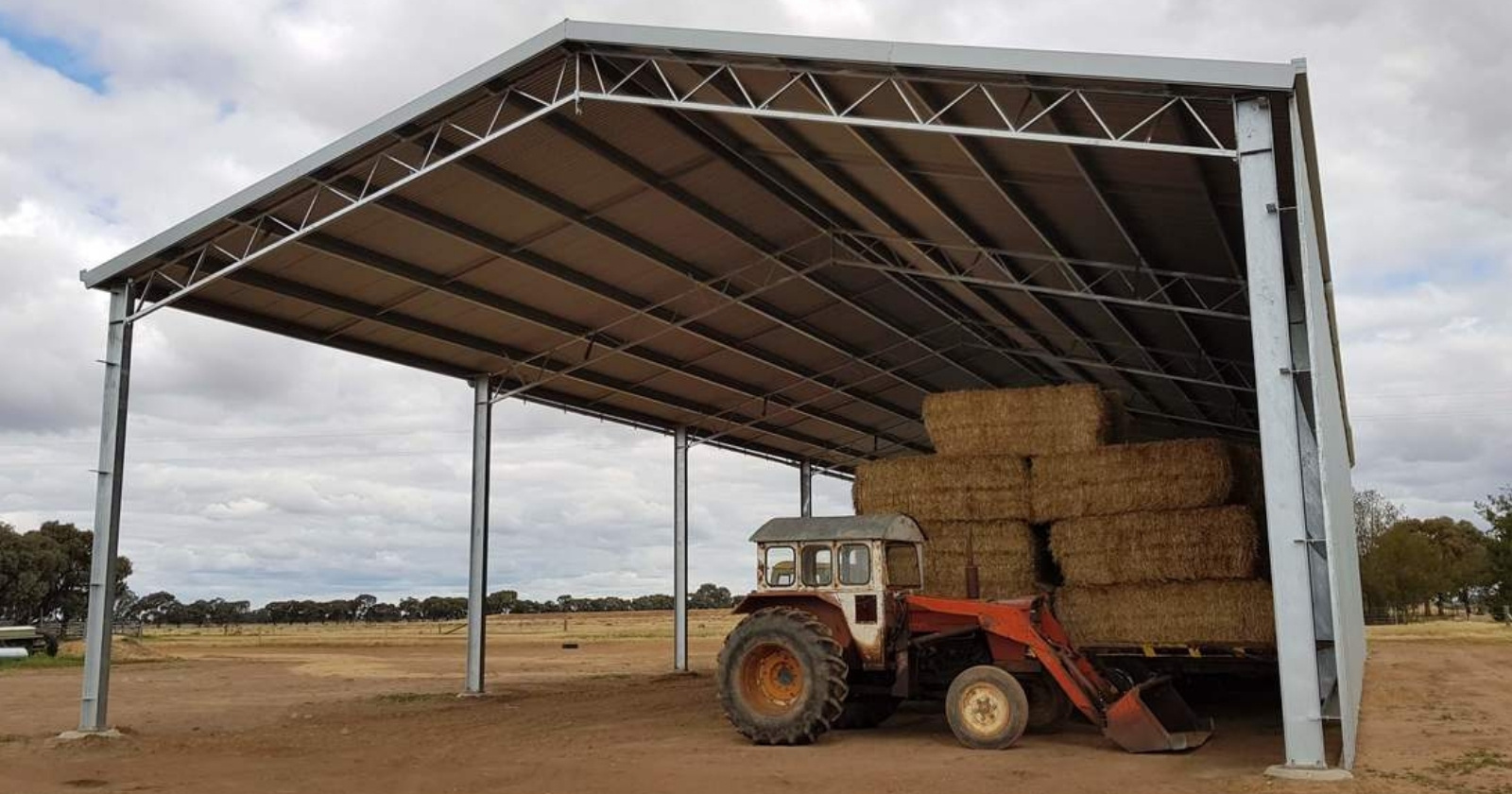
The best way to keep hay dry in Australia is to bale it at the correct moisture level, store it off the ground, maintain airflow around the stack, and protect it from rain and runoff.
Moisture is one of the biggest causes of hay spoilage, mould growth, loss of feed quality and, in severe cases, spontaneous combustion.
For long-term storage, a well-designed hay shed can bring several of these protections together by keeping rain off the bales, providing ventilation and allowing hay to be stored above ground. But the shed itself isn't enough: hay still needs to be properly cured, monitored and stacked.
What Causes Hay to Spoil?
Most hay spoilage traces back to one thing: moisture. Bale too wet and the hay heats up, moulds, and loses feed value before it's even stacked. At worst, damp bales can heat to the point of spontaneous combustion, which is the leading cause of haystack fires in Victoria.
A single damp bale can be enough to ignite a haystack. As a guide, recommended moisture levels vary depending on bale type. Large square bales generally require lower moisture levels because their density can make it harder for heat to escape.
A meter takes the guesswork out of it, and testing bales in a few spots gives a truer reading than a single prod.
Getting it right at baling is only half the job. The rest comes down to how the hay is stored, because even well-cured bales can be exposed to moisture if they're sitting on damp ground or stored in humid conditions.
If you're regularly storing hay, a well-designed hay shed can help bring the key storage requirements together: keeping rain off the bales, allowing airflow and providing a dry, raised floor.

How Does Airflow Help Keep Hay Dry?
Good airflow is what keeps a stack dry from the inside.
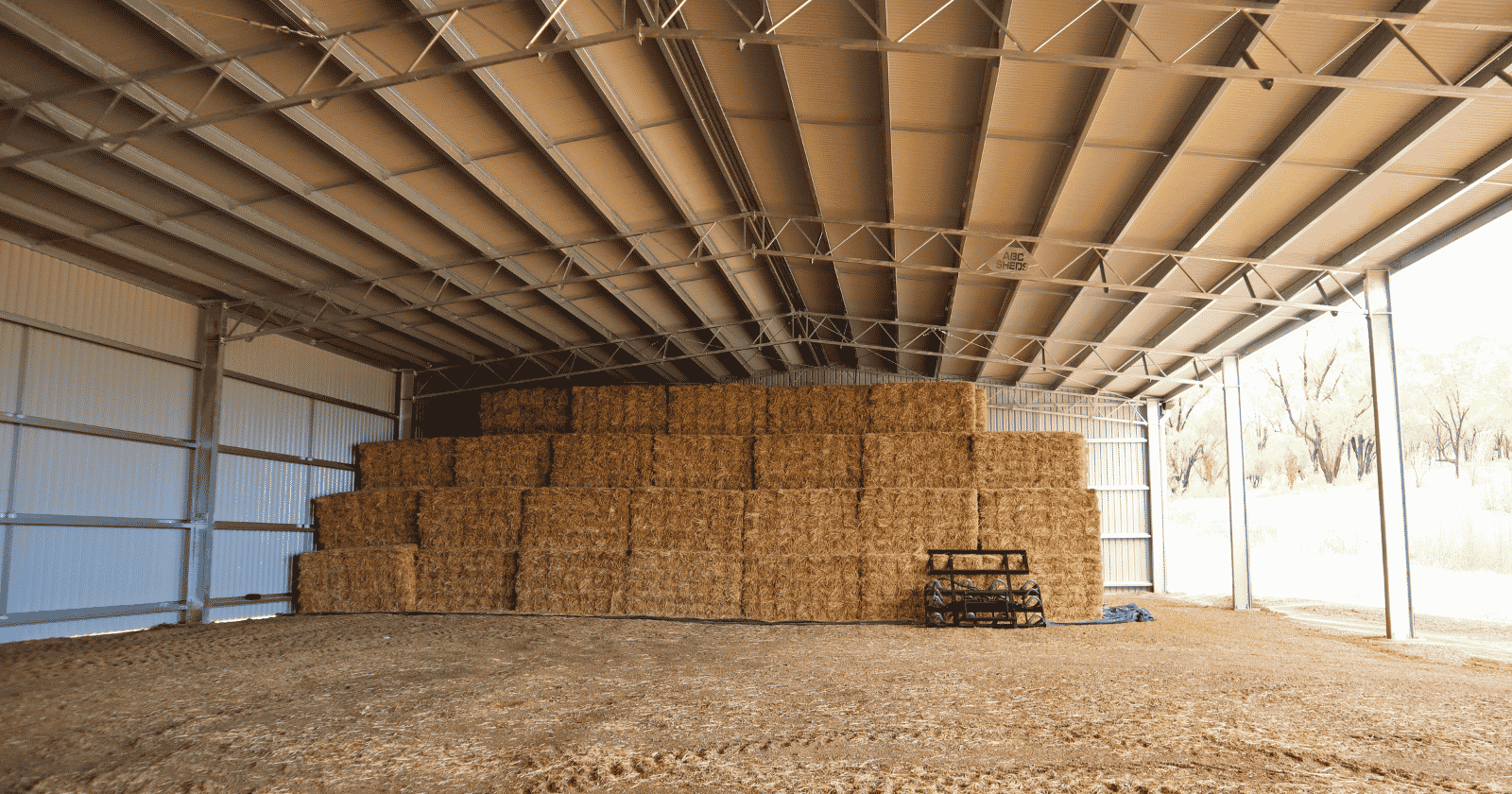
Ventilation carries away the small amount of heat and moisture that bales naturally give off, keeping the stack cool and dry. Pack bales tightly into a closed space with little airflow, and that moisture has nowhere to escape.
How Do You Keep Hay Off the Ground?
Ground contact is another big offender because bales sitting straight on soil or concrete wick up water from below.
The bottom layer is often the first to deteriorate, particularly where bales are in direct contact with damp ground. Storing hay on a raised, well-drained base makes a real difference.
Simple ways to lift bales off the ground include:
- Timber pallets or old tyres for smaller operations
- A compacted gravel or crushed rock pad for better drainage
- Purpose-built raised flooring inside a shed
- Dunnage or bearers under large square bales
Even a rough gravel pad beats bare earth. The aim is to break that direct contact and give water somewhere to drain away rather than soak upward into the stack.
How Should You Stack Hay for Protection?
How you build the stack matters as much as where you put it.
Bales should be arranged so air can move between and around them rather than sealing them into a solid, damp block. Leaving adequate space around the stack helps promote airflow and allows heat and moisture to escape.
How Should You Store Round Bales?
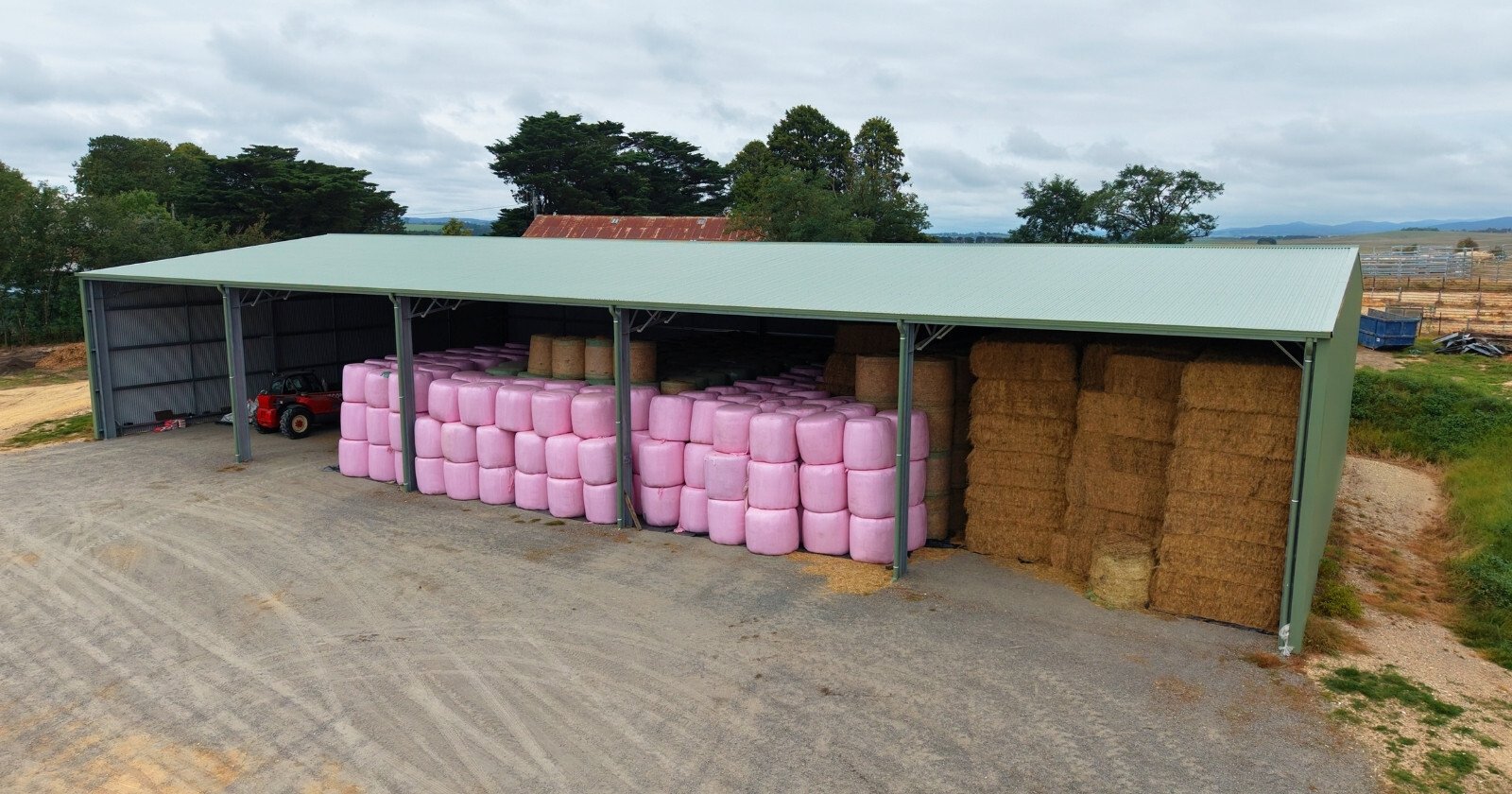
Round bales store best end to end in rows, with a little space between each row so rain runs off instead of pooling.
How Should You Store Square Bales?
Square bales stack tightly and use space well, which makes them a good fit for shed storage where they're already out of the weather.
If you're storing outside without cover, feed out the older bales first, since they won't hold up as long as bales kept under a roof.
Outdoor storage is really a stopgap, though. For hay spoilage prevention that lasts season after season, hay wants a roof over its head.
How Do You Keep Hay Dry in Australia?
Good hay storage comes back to the same handful of things: bale at the right moisture, keep air moving through the stack, get bales up off the ground, and store the lot under cover.
Manage those, and you'll carry quality feed through to the dry months with far less waste.
A well-designed hay shed brings all these together, helping you:
- Protect hay from rain and weather: Keep moisture away from the bales to reduce spoilage and feed waste.
- Improve airflow: Open-sided designs allow air to move through the stack, helping prevent moisture and mould build-up.
- Keep bales off the ground: A dry, raised storage area helps protect hay from ground moisture.
- Store more efficiently: Purpose-built storage lets you stack hay safely and make better use of available space.
- Make handling easier: Load, unload and access your hay under cover, with room to keep handling equipment nearby.
For many farms, a good hay shed is one of the most practical investments for protecting valuable feed. By reducing spoilage and making storage and handling easier, it can help save time, feed and money season after season.
What Should You Look for in a Hay Shed?
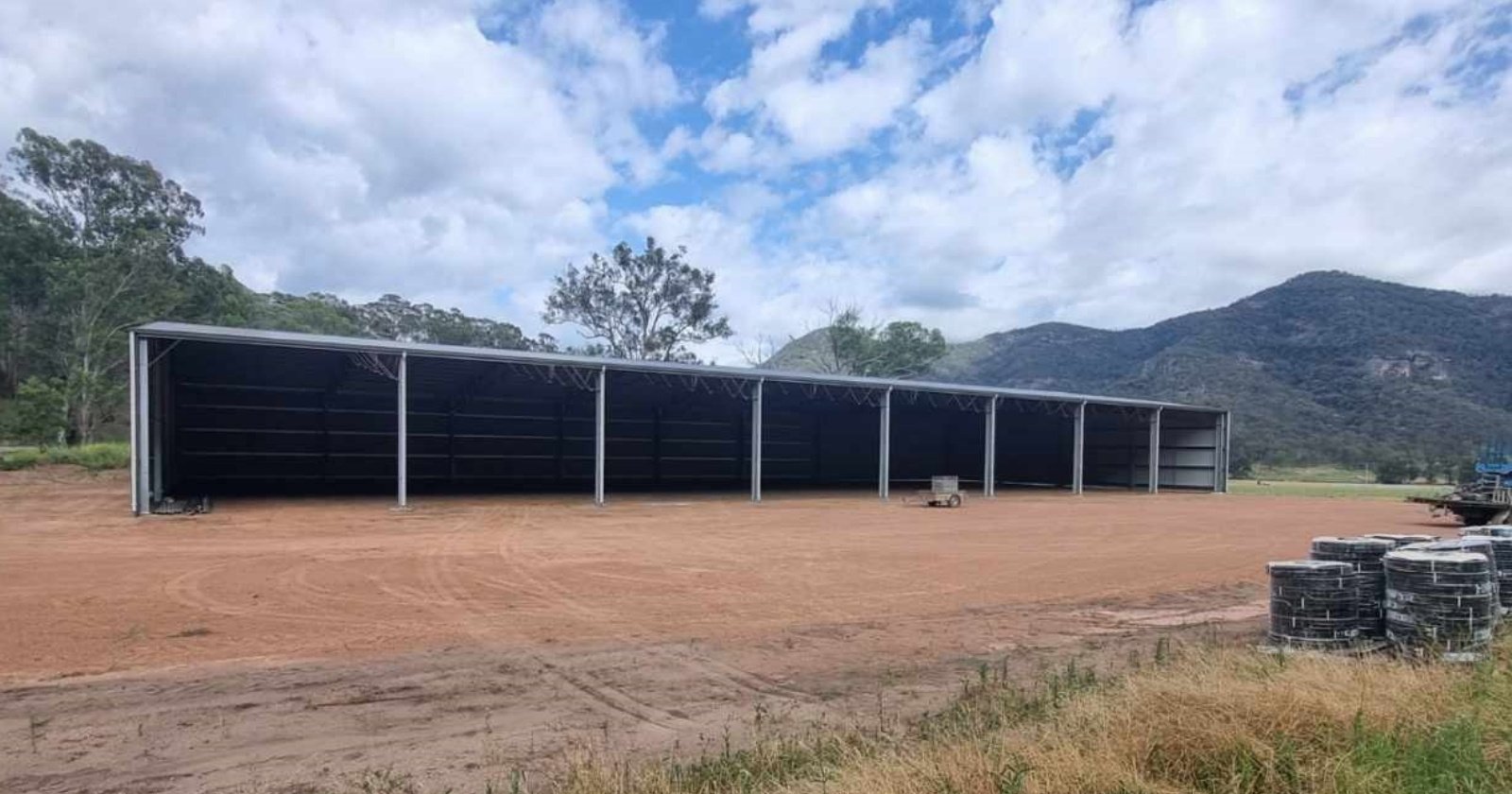
A hay shed needs enough height and width for your bale sizes and machinery, open sides or vents for airflow, and an orientation that suits your prevailing wind and weather.
Hay sheds built for Australian conditions — sensible roof pitch, decent eaves, and materials that handle the climate — will keep feed in far better shape than a generic shed thrown up in a rush.
Ready to Plan Your Hay Storage?
If you're ready to protect your hay with a purpose-built storage solution, the next step is to work out what will suit your operation.
Use our Hay Shed Calculator to work out an optimal shed size based on your bale size and quantity.

.svg)