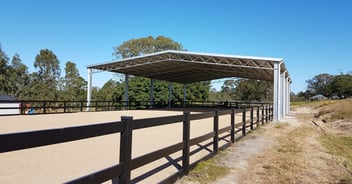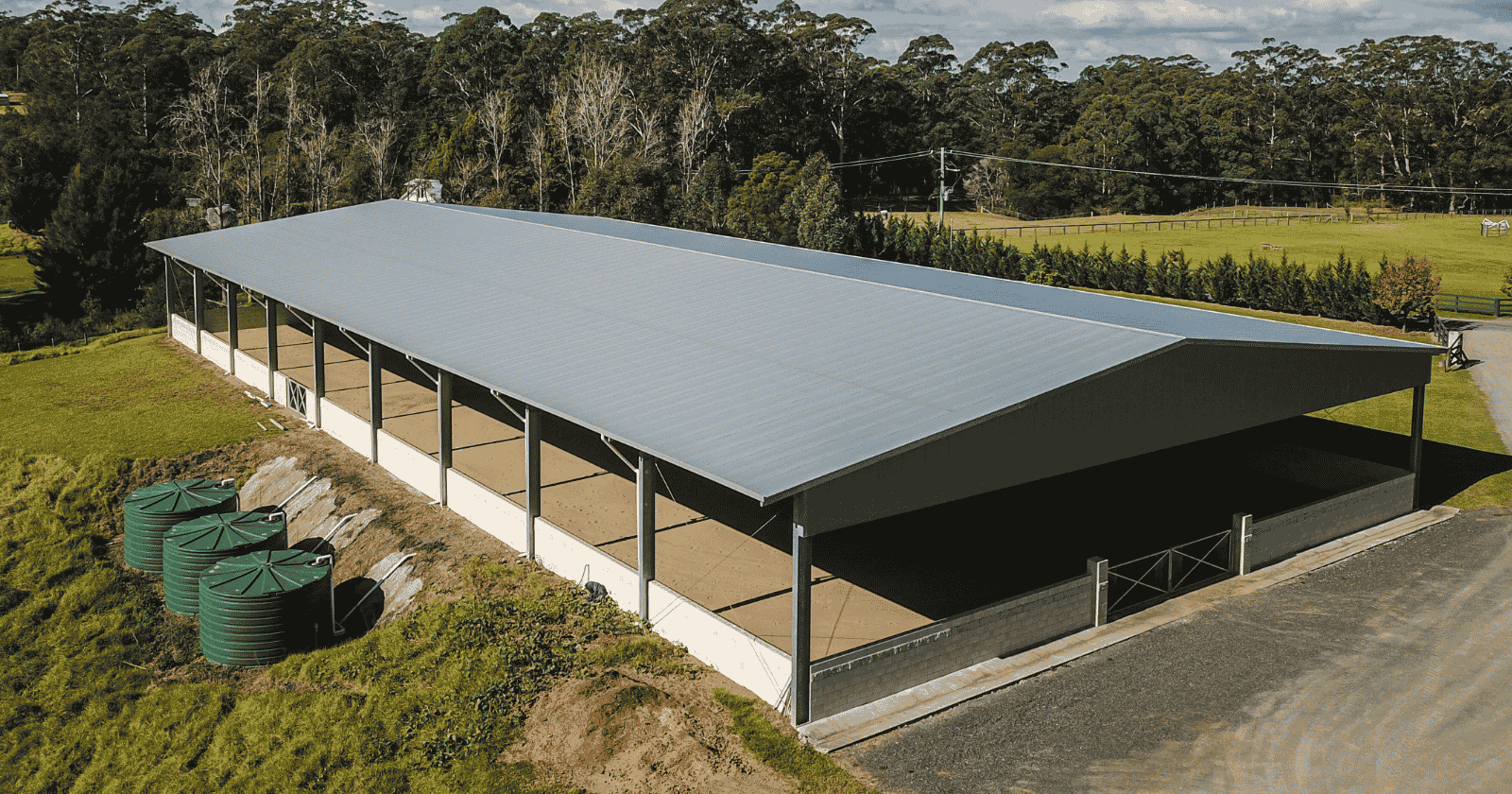
A covered arena is one of the biggest investments an equestrian property will make, and the builder you choose shapes how well it performs for decades. A poorly designed structure can leave you working around internal posts, dealing with a waterlogged riding surface or struggling with insufficient roof clearance for your chosen discipline.
Choosing the best horse arena builder in Australia depends on your facility's intended use, required span and height, site conditions and preferred level of enclosure. Surface, drainage and lighting matter too, as does whether the project includes stables, viewing areas or storage.
For commercial, competition and premium facilities, experience with large clear-span structures and complex project requirements matters most. Below, we cover what to look for, the arena types we build and how covered, sheltered and indoor designs compare.
What should you look for in a horse arena builder?
Start with the work the arena needs to support. A private riding space for a couple of horses has very different requirements from a training business running lessons six days a week, or a venue hosting competitions. Any good builder will ask about your disciplines, horse numbers and future plans before talking about steel.
From there, look for a builder who can give clear answers on the structural and practical details:
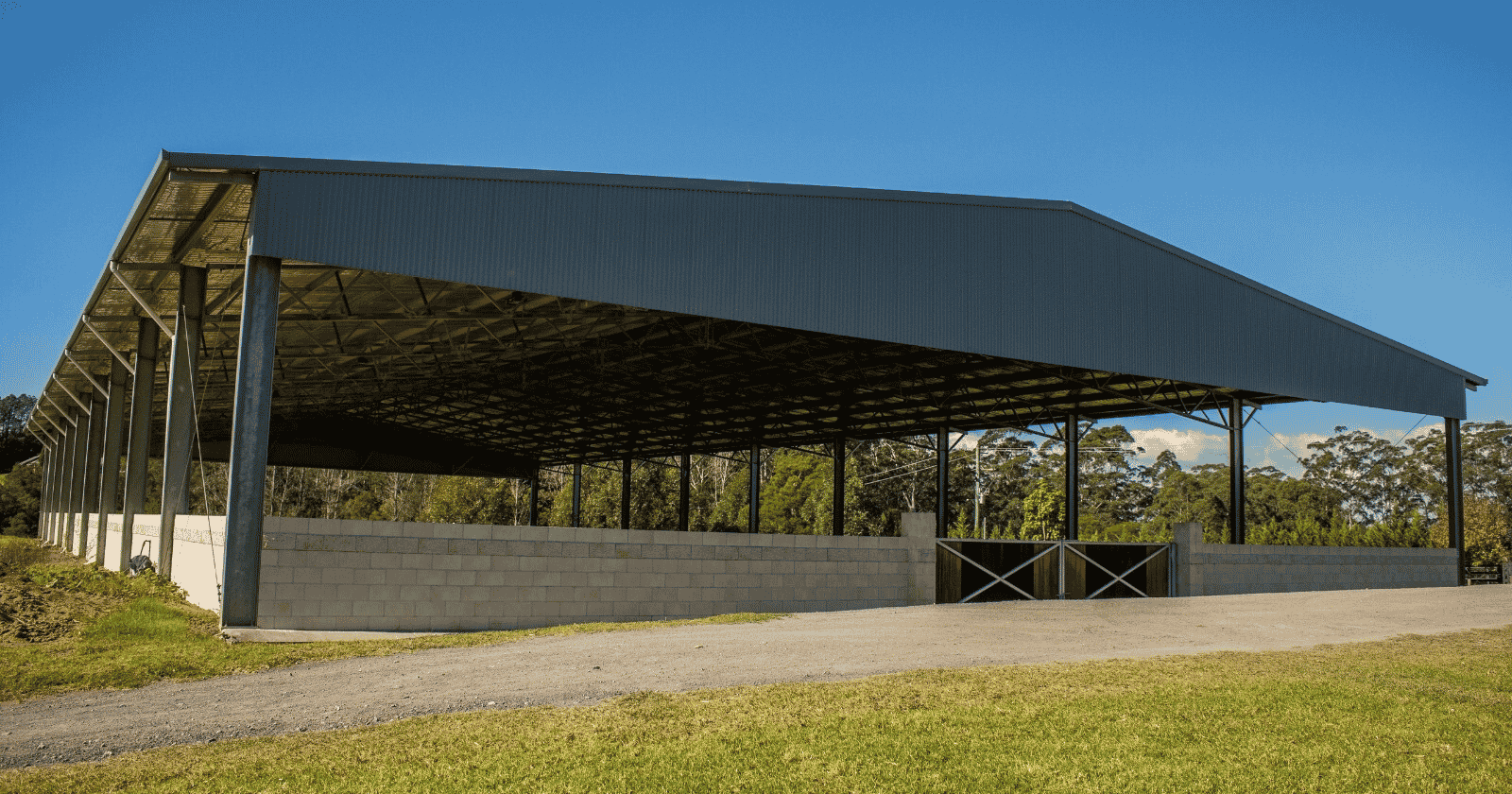
- Clear span: Internal posts can create safety risks and restrict the usable riding area, so ask how wide the builder can span without posts or knee bracing.
- Height: Jumping, cutting and young horse work need more headroom than flatwork, so eave height should suit the discipline.
- Site engineering: The structure should be designed for your wind region and terrain, and comply with the National Construction Code (NCC).
- Steel quality: Hot-dip galvanised structural steel holds up far better in rural conditions than lighter, cold-formed frames.
- Enclosure options: Roof only, partially walled or fully enclosed, depending on your climate and airflow needs.
- Surface, drainage and lighting: The design should keep water off the footing, manage roof runoff and allow for lighting if you ride early or late.
- Integrated facilities: Stables, wash bays, viewing areas and storage are easier to plan into one structure from day one.
Track record counts as much as specs. Ask to see completed arenas of a similar size and use to yours, and find out how the builder handled design changes mid-project. Their answer says a lot about how they manage complex builds.
Finally, check approvals support and warranties. Large arenas usually need council consent, so certified engineering plans and a builder who knows the process can save you months. Every Standwell arena comes with a 25-year guarantee, which gives you a fair idea of how long we expect it to last.

What types of horse arenas can Standwell build?
Our arenas are fully engineered to span from 9 to 60 metres wide without internal posts or knee bracing, so the structure fits the arena you want instead of limiting it. We've delivered equestrian facilities across New South Wales, Victoria and Queensland, from compact training spaces to large commercial builds.
Private riding arenas
For owners who want reliable riding time at home, a roof-only or partially enclosed cover over a 20m x 40m or 20m x 60m arena is a popular choice. These builds get the same hot-dip galvanised frame and site-specific engineering as our largest projects, just at a scale that suits the property.
Large-scale training arenas
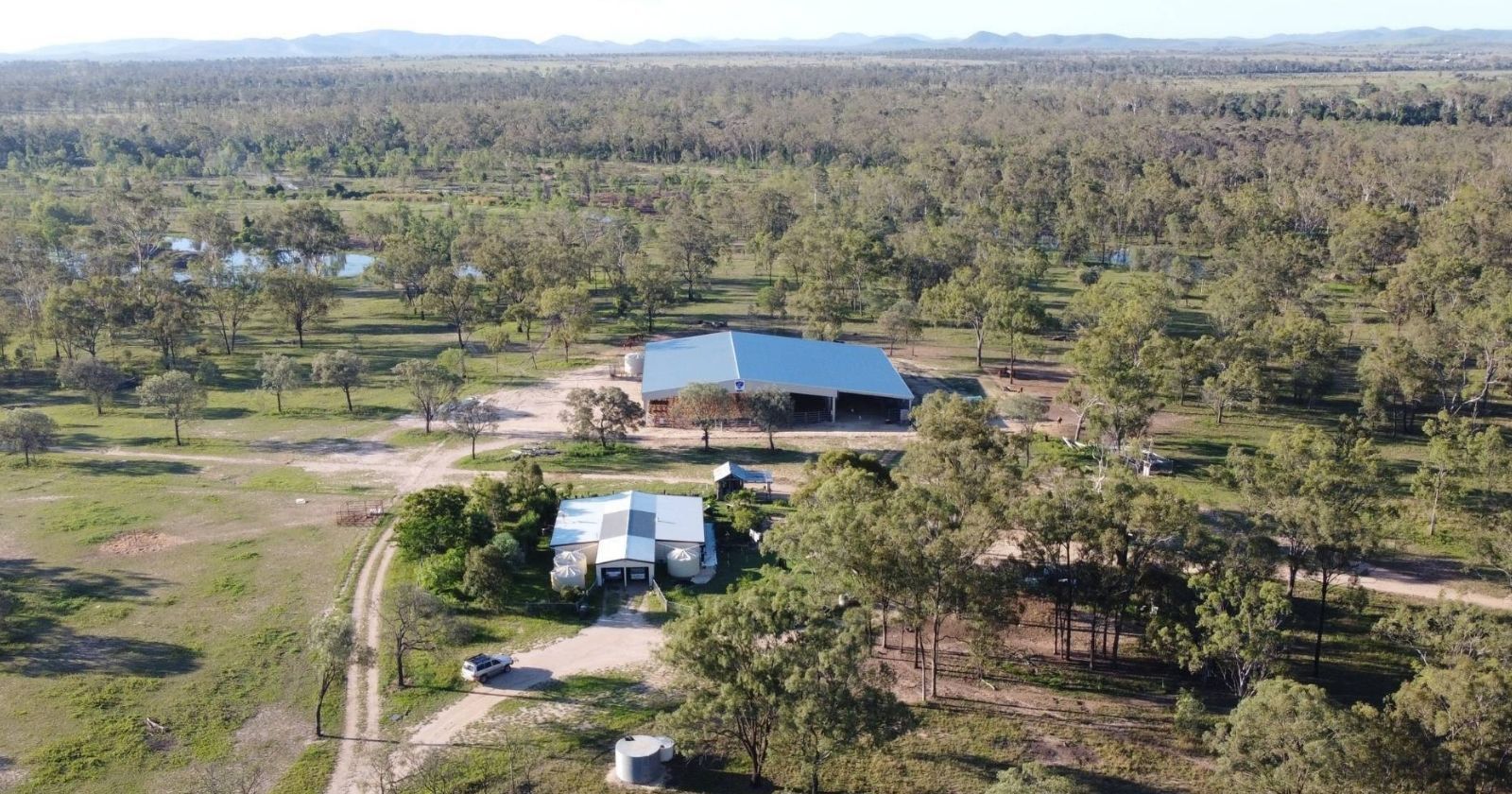
Training businesses need an arena that works every day, whatever the forecast. For Top Gun Horse Training near Rockhampton, we built a 36m x 30m roof-only arena with 410UB hot-dip galvanised columns and Duragal open-web joist trusses, giving the team year-round coverage for intensive cutting, cow horse and campdrafting work.
Competition arenas
Competition facilities need full-size riding areas, warm-up space and room for spectators, judges and horse traffic. With clear spans up to 60m, we can design generous layouts and add skillions and awnings for stabling and storage, so the whole venue works as one facility.
Jumping arenas
Jumping needs width for courses and height for horse and rider clearance over fences. With clear spans up to 60m, we can size the structure around your course layout.
Covered dressage arenas
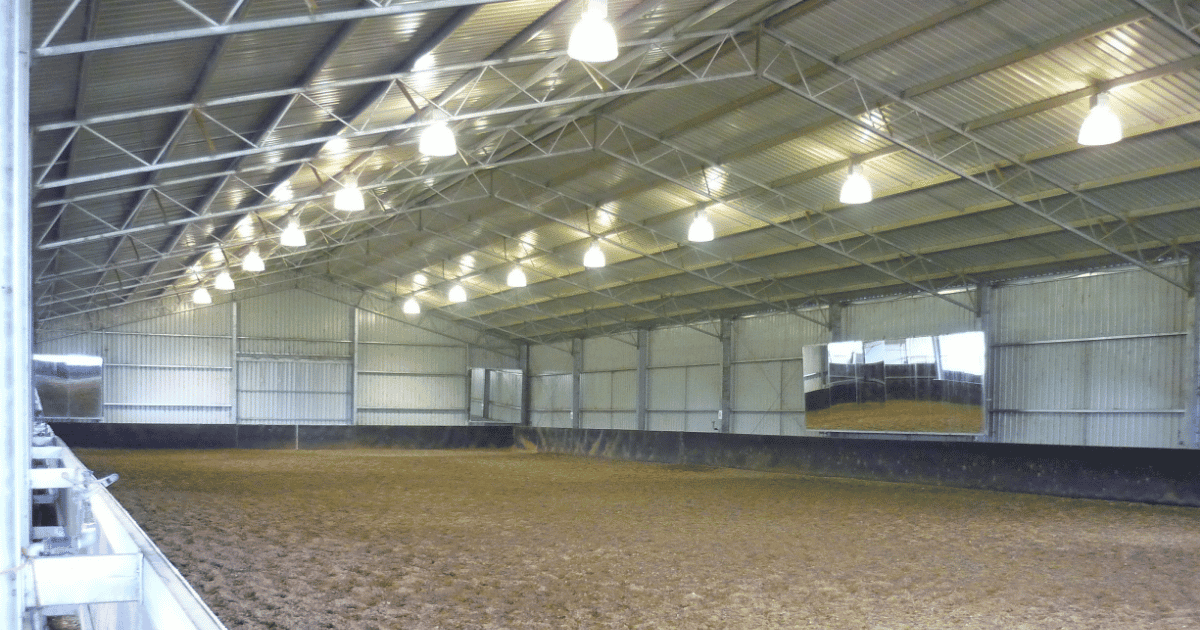
We build covered dressage arenas of every size, from standard 20m x 60m arenas to boutique facilities such as Glenhill Sporthorses in the Southern Highlands, where a professional rider needed a 66m covered arena to train competition horses. Options include skylights, mirrored walls and full enclosure for consistent conditions all year.
Therapeutic and community arenas
Our work also includes a 70m x 21m arena cover in Muswellbrook built for riding for people with disabilities, plus a covered dressage arena and custom stable block for an equine therapy provider in the Southern Highlands. These facilities rely on safe, accessible spaces that can run sessions in any weather.
Covered, sheltered or indoor horse arena: what's the difference?
Builders and riders often use these terms interchangeably, but they describe different levels of enclosure. The right one depends on your climate, budget and how you use the arena.
A covered arena is a roof-only structure over the riding area. It protects the surface from rain and sun while keeping airflow and visibility high, which is why it's common in warmer parts of Queensland and for disciplines such as cutting.
A sheltered arena adds partial walls, windbreaks or gable end sheeting on the exposed sides. An indoor arena is fully enclosed, giving the most control over wind, dust and temperature, often with skylights, insulation and large doors for ventilation.
|
Arena type |
Best suited for |
Main considerations |
|
Covered (roof only) |
Warm climates, cutting and western disciplines, cost-conscious training facilities | Wind-driven rain can reach the edges, so perimeter drainage needs planning |
|
Sheltered (partially enclosed) |
Exposed, coastal or windy sites, dressage and general training | Walls should block prevailing winds without cutting off airflow |
|
Indoor (fully enclosed) |
Cold or frosty regions, competition venues, premium and commercial facilities | Ventilation, natural light, artificial lighting and typically higher upfront construction costs |
Whichever you choose, the frame should be engineered for it from the start. Adding walls later changes the wind loads on the structure, so talk through future plans with your builder early.
Standwell project: Gwandalan Stables, Scone NSW
Gwandalan Stables in Scone is a purpose-built facility for high-performance dressage training, run by dressage rider, trainer and coach Robyne Smith alongside her family's large dairy operation. For more than a decade, the property relied on an outdoor arena that was hard to use in hot, wet or frosty weather.
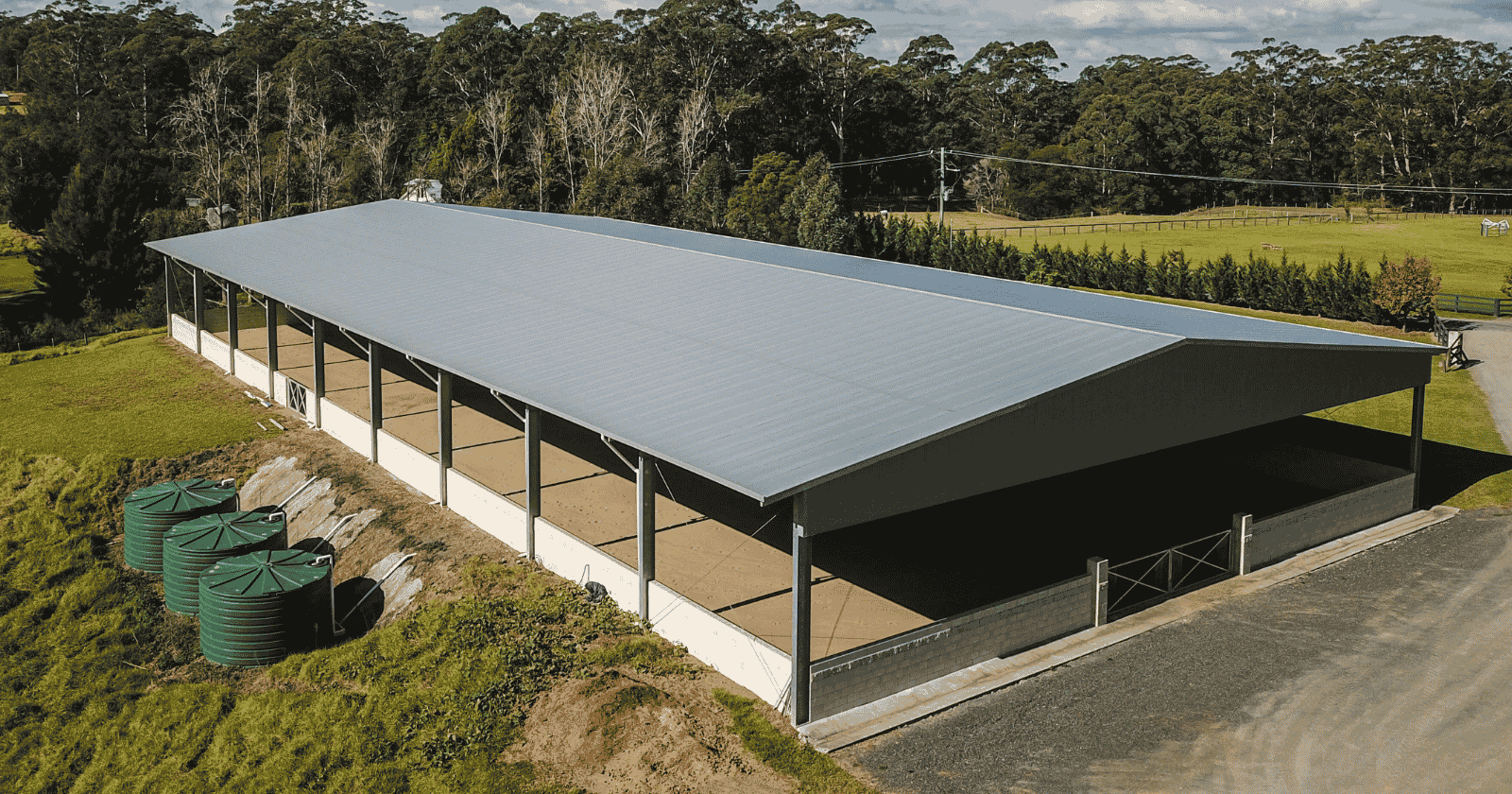
We designed and built a 66m x 20m x 5m structure around a 60m x 20m covered arena, with an extra bay for dry access during wet weather. An 8m skillion along one side houses a fully enclosed stable block with a breezeway and several 5m x 6m stables.
The design adapted as the build progressed. We added a large sliding door at the southern end to improve airflow alongside the open northern end, plus a rear roller door for direct access to the muck heap. Roof insulation, rainwater collection from the arena roof and Pale Eucalypt COLORBOND® cladding complete the build.
The arena went up in just 10 days and now supports daily training, lessons and horse care in a region with unpredictable weather. It shows what a premium facility needs: a full-size arena, integrated stabling and a builder flexible enough to adjust the design during construction.
Finding the right builder for your arena
The best covered horse arena builder for your project is one that can match the structure to how you ride, train or compete, and back it up with proven equestrian builds. Span, height, enclosure, site engineering and integrated facilities should all be part of the first conversation, whatever the size of your property.
From private riding arenas to commercial, competition and premium equestrian facilities, Standwell designs and builds steel arenas to suit every scale and discipline. Request a quote today or use our online shed builder to start planning a horse arena built around your property.

Frequently asked questions ABOUT COVERED HORSE ARENA BUILDERS